

Neck Degenerative Disc Disease
Your neck and lower back are the two most common places to feel pain as you get older. Your neck contains seven bones, called the cervical vertebrae. They sit at the very top of your spine, connecting your head to your shoulders. When anything happens to these bones or their support system — the vertebral discs, muscles, tendons, and cartilage — the result is neck pain.
Between each vertebra in your neck is a disc that acts as a shock absorber. Each disc is made up of a gel-like center surrounded by a thick shell. Discs keep your vertebral bones apart and facilitate movement. If a disc becomes compromised, it may collapse or leak. When your vertebrae squeeze closer together, they often impinge on nerves, and that's what causes pain.
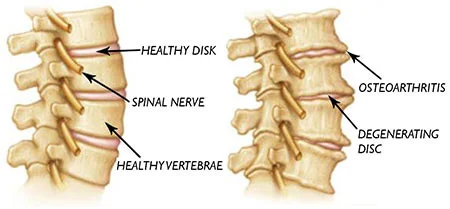
Neck Degenerative Disc Disease NYC — SPIN Sports Pain Specialists
Ready to treat your neck pain?
Same-day degenerative disc disease appointments available.
What Are the Causes?
Participants in contact sports — including football, soccer, and hockey — are more susceptible to neck injuries than most people. But other ailments can cause pain in your neck, such as:
- Muscle spasms
- Pinched nerve
- Herniated disc
- Stenosis
- Degenerative arthritis in the neck
- Degenerative disc disease
Sometimes, your pain goes away on its own without the intervention of degenerative disc disease neck treatment. Maybe it was a tight muscle and you worked out the kink. Other times, though, a damaged disc is causing of the pain. In this case, you need to visit our sports and pain doctor.
What Are the Symptoms of Degenerative Disc Disease in the Neck?
Your symptoms can include pain, numbness, or weakness. Moreover, even though the cause of your pain is in your neck, you can sometimes feel the symptoms in your spine, neck, arms, or hands. You need a doctor's help to determine where your pain originates.
Unless you've been in an accident of some kind, the onset of neck pain usually starts in your cervical spine. If your pain doesn't respond to over-the-counter pain medicine or if it gets worse, it's time to see our pain specialist. If you have a degenerative arthritis neck condition or a pinched nerve, the real cause may be degenerative disc disease.
Diagnosing the Cause of Your Neck Pain
If your pain is due to degenerative disc disease or degenerative arthritis in the neck, there are a number of tests that your Midtown Manhattan physician can run to reach an accurate diagnosis. The first steps involve a physical examination and a medical history. Make sure to tell your doctor if you've been in an accident or had an injury from sports.
- X-rays, a common test that can show bone spurs or injuries to the vertebrae themselves
- MRIs, which illuminate soft tissue, like the spongey discs in your spine
- CT scans, which can detect other diseases, such as spinal stenosis
- An electromyogram or an EMG tests muscles that are experiencing weakness
Osteoarthritis is the most common diagnosis for explaining degenerative disc disease in the neck. Other terms your doctor may use to describe this condition include a degenerative arthritis neck condition, osteoporosis, or degenerative joint disease. All are due to a damaged disc in your cervical spine. Even a diagnosis of a herniated disc or spinal stenosis is related to the breakdown of the discs in your spine.
Neck Degenerative Disc Disease Treatment in Manhattan, NY
If your doctor finds degenerative arthritis in the neck or a similar malady, a degenerative disc in the neck treatment plan is the next step. Surgery is always the final option; non-invasive treatments to ease your pain enough to let you return to your daily routine may include:

Rest

Physical therapy

Non-steroidal anti-inflammatory drugs (NSAIDs)

Cervical epidural steroid injection

Spine facet injections

Sympathetic block injection, usually for chronic pain
If you don't respond to conservative treatments, surgery may be necessary. Surgical procedures include disc replacement and fusion, but these operations may result in a loss of range of motion. Other risks from surgery include nerve damage and infection.
How to Prevent Degenerative Disc Disease in the Neck?
Degenerative arthritis in the neck is often caused by aging. But there are some things you can do to lessen your pain and delay the onset of degenerative arthritis neck conditions:
- Quit smoking
- Practice good posture
- Don't carry heavy bags on one shoulder
- Take frequent breaks from sitting to walk and stretch
- Don't tuck the phone between your cheek and shoulder
- Find a good sleep position, using pillows that support your neck
Ready to find relief from degenerative disc disease?
Dr. Melepura's Midtown Manhattan clinic offers same-day appointments for evaluation and treatment.
Real Stories from our Patients








Dr. Febin Melepura, MD
Double Board-Certified Pain Specialist
Meet Dr. Febin Melepura — Your Neck Degenerative Disc Disease Specialist in NYC
Dr. Febin Melepura, MD is a double board-certified interventional pain management specialist and the founder of the Sports Pain Institute of New York. He completed his residency and fellowship training at New York Presbyterian Hospital / Columbia University Medical Center, one of the nation's leading academic medical centers.
He holds dual board certifications from the American Board of Anesthesiology and the American Board of Pain Medicine, and has treated more than 7,500 patients and performed over 5,250 procedures throughout his career. He has been named a Top Pain Management Doctor in New York and one of America's Top Doctors™ by Castle Connolly.
Dr. Melepura's approach to neck degenerative disc disease is rooted in precision: identify the exact source, treat it with a targeted injection, and get you back to your daily life as quickly as possible.
What Our Degenerative Disc Disease Patients Say

"Able to make an appointment to see Dr. Melepura on short notice… attentive to my concerns… Jazmin was also very kind and helpful."

"Excellent hospitality, listener and explainer… highly recommend the doctor and the place."
"Dr. Melepura is the best! He worked with me to find the optimal solution to my shoulder pain while I was preparing for a fight!"
"Lovely, bright and modern… doctor and staff were kind… felt my concerns were heard."
"Helpful and friendly staff who gladly follows up with you if and when needed. Dr Melepura was very helpful and professional as well as provided me with excellent information and feedback."
"Dr Febin is fantastic! Highly recommend him and his practice the Spin clinic. The doctor is a good listener, kind, attentive and gave me great advice. "
"Dr.Melepura was very efficient and interpersonal, felt like he was understanding the problems I was having and explained the processes to take to rehabilitate. I would recommend."
"I felt listened to and truly understood by Dr. Melepura. Started PT the very next day. They were very friendly and I didn't feel rushed at all. Already recommended them to my friends who have or continue to play through pain."