

Hip Joint Injections
While your shoulders provide the functionality and wide range of motion your arms need, your hips help you maintain your balance and mobility. Since they're weight-bearing joints, your hips have to be strong but well-lubricated to allow your legs to move without pain or friction. The system of muscles, ligaments, tendons, and nerves that pass through your hips allows you to do everything from balancing on one leg to running and jumping at full speed.
Hip pain from a medical condition like tendonitis or an injury to your hip makes your life agonizing. As with back pain, a sore hip hurts no matter what position you try — sitting, standing or lying down. If over-the-counter non-steroidal anti-inflammatory drugs (NSAIDs) don't help, you need to see your pain management specialist to find out what treatment options are available.
Hip Injection NYC — SPIN Sports Pain Specialists
Ready to get rid of your hip pain?
Same-day hip injection appointments available.
Diagnosing Your Pain
A cortisone injection in the hip is one way to treat the pain you're experiencing, but it's usually not the go-to cure your doctor recommends. In fact, the very first step toward effective treatment is always the initial consultation visit. When you come into the Sports and Pain Institute of NY, the physician you meet:
- Conducts a thorough physical examination
- Asks you about your medical history
- Maybe even orders imaging tests, such as an x-ray or MRI
The goal of your doctor is to arrive at an accurate diagnosis. Even if the cause of your pain seems clear, your physician has to rule out underlying conditions, like a labral tear.
Once the cause of your pain is known, your doctor often recommends conservative, non-invasive treatments, such as:
- Rest
- Alternating ice and heat
- Over-the-counter pain medicine
- Physical therapy
Time for a Hip Steroid Injection
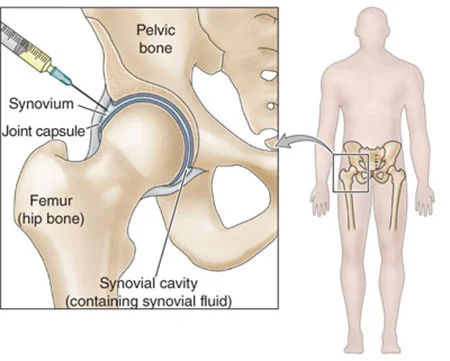
If those treatment options don't work, a injection may be the next alternative to try. Hip injections deliver anti-inflammatory steroidal medication and a local anesthetic right into your hip where it hurts. A cortisone injection in the hip:
Relieves your pain instantly, due to the local anesthetic
Begins to reduce the inflammation in your hip
Allows your body to begin to heal faster because it's not fighting the pain all the time
Requires a couple days to take full effect
Last up to three months
Is virtually risk-free
Has been used for decades to relieve joint pain
Is a painless procedure itself
Your experienced pain specialist may need to inject the steroid medicine in multiple spots to adequately surround the painful area in your hips. You most likely need to lie on an x-ray table during the procedure so your doctor can use a fluoroscope to guide the position of the needle. But the injection spot is numbed with a topical anesthetic before the procedure begins, so you won't feel much of anything.
Hip Injections' Risks and Side Effects
Because there are so many ways to hurt your hip, from blunt force trauma to slow-developing arthritis, a injection can't cure every condition all the time. It's possible it won't work on you. But it's been so successful in treating hip pain that it's worth the rare risk.
Side effects are uncommon with a hip steroid injection, but possible risks and side effects include:
- A warm feeling from the injected area
- An infection at the injection spot
- Steroid crystallization inside your joint from too many hip injections
- Damage to the cartilage of your hip bones
- Damage to a nerve or tendon
- Osteoporosis
- No noticeable effect in pain levels
- A temporary spike in blood sugar levels
Ready to find relief from hip pain?
Dr. Melepura's Midtown Manhattan clinic offers same-day appointments for evaluation and treatment.
After Your Cortisone Injection in the Hip
Normally, you just need to take it easy for the rest of the day. After the local anesthetic in the hip steroid injection wears off, usually within three hours, your pain may return. But once the medication starts to work, often within three days, your pain levels drop dramatically. Follow your New York City physician's post-injection care instructions to minimize the risks and promote the effectiveness of the procedure.
If you develop a fever, contact your doctor right away. Keep the injection spot clean and dry to avoid infection, which is the most common risk. Don't exert yourself until you feel the steroid medicine start to work. Even then, you need to give your body time to heal, so don't rush back onto the court or playing field. If you do, you risk injuring yourself again.

Real Stories from our Patients





































Dr. Febin Melepura, MD
Double Board-Certified Pain Specialist
Meet Dr. Febin Melepura - Your Hip Injection Specialist in NYC
Dr. Febin Melepura, MD is a double board-certified interventional pain management specialist and the founder of the Sports Pain Institute of New York. He completed his residency and fellowship training at New York Presbyterian Hospital / Columbia University Medical Center, one of the nation's leading academic medical centers.
He holds dual board certifications from the American Board of Anesthesiology and the American Board of Pain Medicine, and has treated more than 7,500 patients and performed over 5,250 procedures throughout his career. He has been named a Top Pain Management Doctor in New York and one of America's Top Doctors™ by Castle Connolly.
Dr. Melepura's approach to hip pain is rooted in precision: identify the exact source, treat it with a targeted injection, and get you back to your daily life as quickly as possible.
What Our Hip Pain Patients Say

"Able to make an appointment to see Dr. Melepura on short notice… attentive to my concerns… Jazmin was also very kind and helpful."

"Excellent hospitality, listener and explainer… highly recommend the doctor and the place."
"Dr. Melepura is the best! He worked with me to find the optimal solution to my shoulder pain while I was preparing for a fight!"
"Lovely, bright and modern… doctor and staff were kind… felt my concerns were heard."
"Helpful and friendly staff who gladly follows up with you if and when needed. Dr Melepura was very helpful and professional as well as provided me with excellent information and feedback."
"Dr Febin is fantastic! Highly recommend him and his practice the Spin clinic. The doctor is a good listener, kind, attentive and gave me great advice. "
"Dr.Melepura was very efficient and interpersonal, felt like he was understanding the problems I was having and explained the processes to take to rehabilitate. I would recommend."
"I felt listened to and truly understood by Dr. Melepura. Started PT the very next day. They were very friendly and I didn't feel rushed at all. Already recommended them to my friends who have or continue to play through pain."