

Sciatica Treatment in NYC
Expert Diagnosis & Targeted Relief for Sciatic Nerve Pain - by Board-Certified Pain Specialists in Midtown Manhattan.
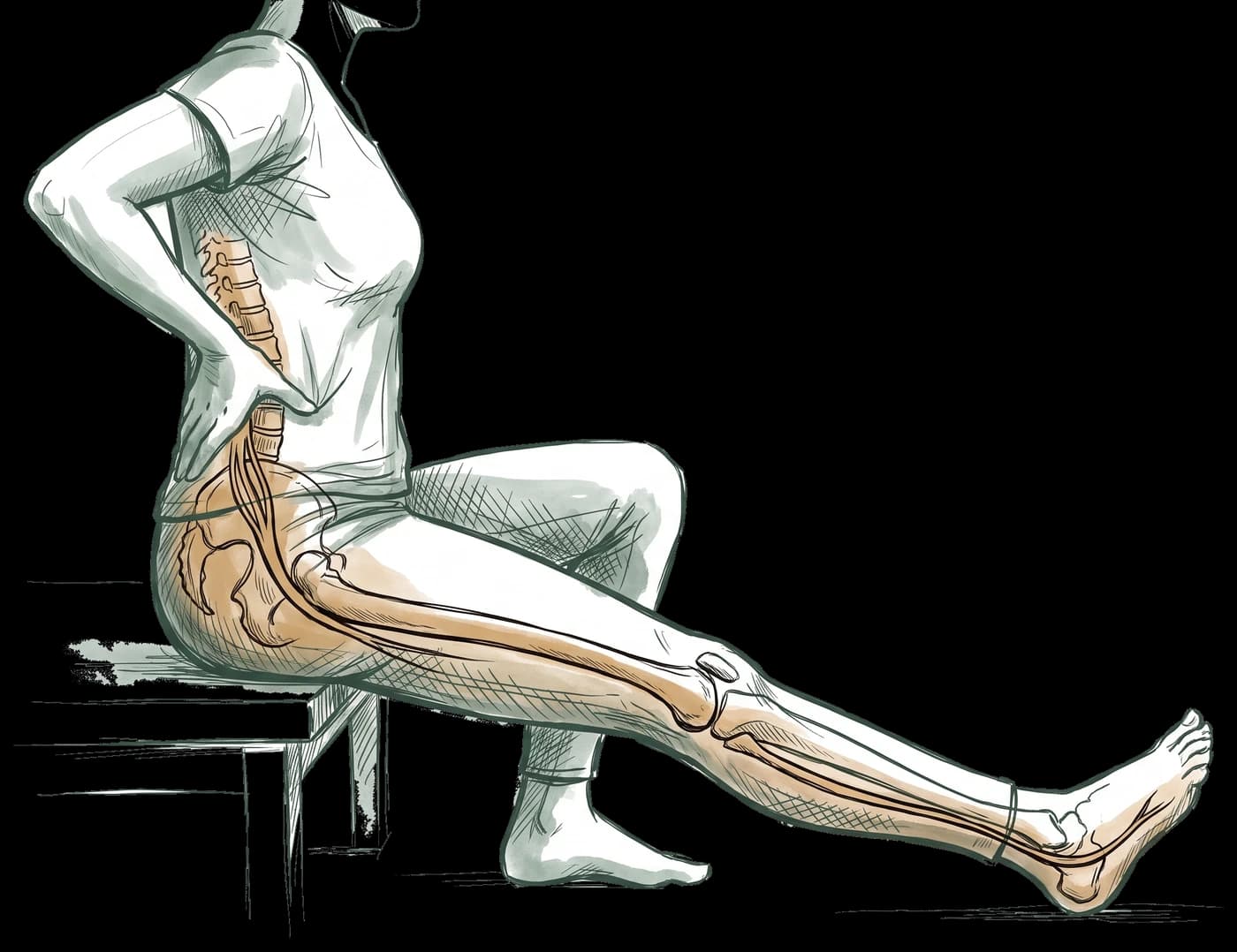
Sciatica is not just back pain - it is nerve pain. When the sciatic nerve becomes compressed or irritated, it produces sharp, burning, or shooting pain that radiates from the lower back through the buttock and down the leg, sometimes reaching the foot. At SPIN, our board-certified sciatica doctors identify the exact root cause and build a targeted treatment plan around it.
If you are searching for a sciatica doctor in NYC, looking for the best doctors that treat sciatica near you, or have already tried home remedies without success, SPIN offers same-day appointments with specialists who treat this condition every day.
Identify Your Sciatica
What Does Your Sciatica Feel Like?
"I have sharp, shooting pain running from my lower back down through my buttock and leg."
Common Causes of Sciatica Our Doctors Treat
Our sciatica specialists identify the exact source of nerve compression before recommending treatment - the right intervention depends entirely on the cause.

Disc Herniation
The most common cause of sciatica. When the soft inner material of a spinal disc presses through its outer casing, it compresses the nerve root at L4, L5, or S1 - producing the classic radiating leg pain pattern.

Spinal Stenosis
Narrowing of the spinal canal, most common in adults over 60. Compresses nerve roots as they exit the spine, producing bilateral leg heaviness and cramping that eases when sitting (neurogenic claudication).

Piriformis Syndrome
The piriformis muscle in the buttock runs directly over or around the sciatic nerve. When this muscle tightens or spasms, it compresses the nerve - producing symptoms identical to disc sciatica, but requiring entirely different treatment.

Sacroiliac Joint Dysfunction
SI joint problems can refer pain into the buttock and leg in a pattern that closely mimics true sciatica. Accurate diagnosis requires clinical testing and, where needed, a diagnostic injection.

Degenerative Disc Disease
Age-related disc thinning and bone spur formation can gradually compress nerve roots without an acute disc event. Most common cause of chronic sciatica in adults over 50.

Spondylolisthesis
Forward slippage of one vertebra over another, narrowing the exit pathway for nerve roots and producing sciatica-like symptoms, particularly with extension movements.
Symptoms of Sciatica
Your sciatic nerve lets you know when it's unhappy. The most common symptom is pain radiating from your lower back down to the back of your thigh and leg. Typically, it affects only one side of your body.
Sciatic nerve pain varies in intensity from mild to excruciating. The pain can feel like a burning sensation, a sharp stabbing pain, or even an electric shock - and may be accompanied by muscle weakness, numbness, or tingling.
Common Sciatica Symptoms
- Sharp, burning, or shooting pain from lower back → buttock → leg → foot (one-sided)
- Numbness or tingling in the leg, calf, or foot
- Muscle weakness in the leg or foot
- Pain that worsens with sitting, standing, coughing, or sneezing
- Pain that eases temporarily with walking or changing position
When to Seek Help
When to See a Sciatica Specialist
Most mild sciatica episodes improve within 4-6 weeks with rest and conservative care. But there are clear warning signs that mean you should see a sciatica specialist sooner rather than later:
Scroll through the signs that mean it is time to see a specialist.
- 01Pain has persisted for more than 4-6 weeks without meaningful improvement
- 02The pain is severe, shooting, or burning - not just dull or achy
- 03You are experiencing numbness, tingling, or weakness in your leg or foot
- 04You have lost bladder or bowel control - seek emergency care immediately
- 05Your pain is disrupting sleep or waking you at night
- 06You have tried over-the-counter treatments with no relief
- 07Symptoms are progressively worsening rather than improving
Emergency:
- Loss of bladder or bowel control - seek emergency care immediately
Seeing a specialist early matters because untreated sciatic nerve compression can cause progressive nerve damage. The earlier the root cause is identified, the better your outcomes from conservative treatment.
How Sciatica Is Diagnosed

Physical Exam & Clinical History
Dr. Melepura starts with a detailed clinical evaluation: straight leg raise test, reflex testing, neurological assessment (sensation, motor strength), and a full history of when the pain started, where it radiates, and what makes it better or worse.

Imaging: MRI & X-Ray
MRI is the gold standard for identifying disc herniation, nerve root compression level, spinal stenosis, and piriformis abnormalities. X-ray for bony alignment and spondylolisthesis. Where imaging has not yet been obtained and is clinically indicated, we order it before proceeding to treatment.

Diagnostic Injections
When the source of symptoms is unclear between disc, SI joint, or piriformis causes, a targeted diagnostic injection confirms the pain source before treatment is selected. This precision diagnosis approach prevents unnecessary or mismatched procedures.
Conditions identified during diagnosis include: Slipped disc · Spinal stenosis · Piriformis syndrome · Sacroiliac joint dysfunction · Spondylolisthesis · Pelvic injury or fracture
How The Process Works
A Clear Step-By-Step Approach to Sciatica
Understand Your Symptoms
We take a full history: where the pain starts, where it radiates, what makes it worse, and how long it has been present. This clinical picture guides every decision before any scan or procedure.
Identify the Root Cause
Physical exam, neurological assessment, and MRI review pinpoint whether the compression is coming from a disc, the piriformis muscle, the SI joint, or spinal stenosis. Diagnosis drives everything - including which specific injection is used.
Targeted Treatment
We match the intervention to the confirmed source. Disc-related sciatica gets a lumbar ESI at the exact nerve root level. Piriformis syndrome gets a piriformis injection. Stenosis gets a transforaminal or interlaminar approach. Every procedure is image-guided.
Prevent Recurrence
Injection therapy creates a window of pain relief. We use that window for structured physical therapy - core strengthening, hip mobility, postural correction - to reduce the likelihood that sciatica returns.
The SPIN Protocol™
Start Your Recovery →S
Self-Care
Core stabilisation exercises, lumbar flexion/extension work, piriformis stretching protocol. Heat and cold guidance for acute flares. Activity modification to reduce nerve load during recovery.
I
Injury Rehabilitation
Structured physical therapy targeting the underlying cause: disc mechanics, piriformis strengthening, hip mobility, postural correction for stenosis management. Nerve mobilisation (sciatic nerve glide) techniques.


The SPIN Protocol™
P
Precision Inflammation Treatment
Lumbar epidural steroid injections. Selective nerve root blocks at the confirmed level. Sacroiliac joint injections. Piriformis injections with anti-inflammatory or botulinum toxin - all performed under fluoroscopic or ultrasound guidance.
N
Next-Level Prevention
Long-term core conditioning programme. Posture and ergonomics guidance. Return-to-sport protocol for athletes. Imaging review at key milestones to monitor disc or structural changes.
The SPIN Protocol™
Self-Care
Core stabilisation exercises, lumbar flexion/extension work, piriformis stretching protocol. Heat and cold guidance for acute flares. Activity modification to reduce nerve load during recovery.
Precision Inflammation Treatment
Lumbar epidural steroid injections. Selective nerve root blocks at the confirmed level. Sacroiliac joint injections. Piriformis injections with anti-inflammatory or botulinum toxin - all performed under fluoroscopic or ultrasound guidance.
Injury Rehabilitation
Structured physical therapy targeting the underlying cause: disc mechanics, piriformis strengthening, hip mobility, postural correction for stenosis management. Nerve mobilisation (sciatic nerve glide) techniques.
Next-Level Prevention
Long-term core conditioning programme. Posture and ergonomics guidance. Return-to-sport protocol for athletes. Imaging review at key milestones to monitor disc or structural changes.
Sciatica Treatment Options in NYC
Sciatica treatment is not one-size-fits-all. The right intervention depends on the location of nerve compression, the severity of symptoms, how long you have been experiencing sciatica, and whether prior treatments have been tried. At SPIN, every treatment plan is built around your specific MRI findings and clinical presentation.
Lumbar Epidural Steroid Injections
A lumbar epidural steroid injection (ESI) delivers concentrated anti-inflammatory medication directly into the epidural space surrounding the compressed nerve root - at the precise spinal level responsible for your symptoms. This reduces inflammation around the nerve, relieving pain and allowing you to engage in physical therapy. Most patients experience meaningful improvement within 3-7 days. Performed under fluoroscopic (live X-ray) guidance.
Selective Nerve Root Blocks
When sciatica originates from a specific nerve root rather than a broad area, a selective nerve root block delivers medication with maximum precision at the exact level and side of compression - minimising spread to unaffected tissue.
Sacroiliac Joint Injections
When SI joint dysfunction is contributing to or causing your symptoms - a common misdiagnosis that closely resembles true sciatica - a sacroiliac joint injection both confirms the diagnosis and provides therapeutic relief.
Piriformis Injections
For patients whose sciatica originates from piriformis muscle irritation rather than a disc or spine issue, a piriformis injection delivers anti-inflammatory medication or botulinum toxin directly to the muscle - relieving pressure on the sciatic nerve.
Physical Therapy and Rehabilitation
Injection therapy works best when combined with structured physical therapy. The pain relief window created by an injection allows patients to engage in core strengthening, hip mobility work, nerve glide exercises, and postural correction - all of which reduce recurrence risk.
Oral Medications
As part of a comprehensive plan, oral anti-inflammatories (NSAIDs), nerve pain medications (gabapentin, pregabalin), and muscle relaxants can play a supporting role in managing symptoms while more targeted treatments take effect.
When Is Surgery Necessary for Sciatica?
Most sciatica patients do not need surgery. Surgery is reserved for cases involving progressive neurological deficits - such as worsening leg weakness or bladder and bowel dysfunction - or structural instability that cannot be managed with interventional care. If surgery is indicated, Dr. Melepura will provide a clear explanation and a referral to a trusted spine surgeon.
Why Choose Our Sciatica Doctors in NYC
Accurate Diagnosis First
We start with a detailed clinical evaluation and review any existing imaging (MRI, X-ray). Where imaging has not been obtained and is clinically indicated, we order it before proceeding. Treatment is only as good as the diagnosis underneath it.

Image-Guided Injection Precision
Our lumbar epidural steroid injections, selective nerve root blocks, and sacroiliac joint injections are performed under fluoroscopic or ultrasound guidance. The medication reaches the exact site of nerve irritation - not an approximated landmark.

Non-Surgical Commitment
We exhaust all conservative and minimally invasive options before making any surgical referral. For most patients with sciatica, surgery is never required.

Coordinated Physical Therapy
Injection therapy works best as part of a broader plan. We coordinate with physical therapists to ensure the pain relief window from an injection is used productively to build strength and restore spinal mechanics.

Same-Day Appointments
Most patients seen within 24 hours at our Midtown Manhattan office. Same-week and next-day appointments available for new patients.

Most Insurance Accepted
We accept most major insurance plans, including those covering interventional pain management. Benefits verified before your first visit.

Dr. Febin Melepura, MD
Sciatica Specialist & Founder, Sports Pain Institute of New York (SPIN)
Sciatica Doctor in NYC - Double Board-Certified
Dr. Febin Melepura, MD is a double board-certified interventional pain management specialist and the founder of the Sports Pain Institute of New York. He completed his residency and fellowship training at New York Presbyterian Hospital / Columbia University Medical Center, where he specialised in interventional pain management.
He holds dual board certifications from the American Board of Anesthesiology and the American Board of Pain Medicine, and has treated more than 7,500 patients and performed over 5,250 procedures. Named a Top Pain Management Doctor in New York and one of America's Top Doctors™ by Castle Connolly.
Dr. Melepura's approach to sciatica is rooted in accurate diagnosis first - identifying the exact cause of nerve compression - and treating it with precision, using image-guided interventional techniques wherever possible.
- Double board-certified: Pain Management & Anesthesiology
- Fellowship-trained at NY Presbyterian / Columbia University Medical Center
- Castle Connolly & NY Magazine Top Doctor
- 7,500+ patients treated · 5,250+ procedures performed
- Founder, Sports Pain Institute of New York (SPIN)

Real Stories from our Patients












"I booked an appointment with Dr. Melepura for sciatica after coming across some amazing recommendations on Reddit, and I’m so glad I did! He was incredibly patient, really listened to my concerns and explained everything clearly. I left feeling reassured and confident about the next steps. Looking forward to my follow-up appointment."
"Highly recommend this office. Great communication and very thorough, I finally found what was causing severe back pain after multiple other Drs appts. I’m grateful I found Dr Melepura and his staff"
"Dr Melepura is great thoughtful, helpful and genuinely nice and patient. He really helped me with very bad hip and back pain."
"I’m so thankful I found this place when I was going through the worst back pain of my life i couldn’t barely walk. Dr. Melepura and his staff were incredibly kind and helpful. He did everything he could to help relieve my pain. I highly recommend him with my eyes closed!"
"Absolutely wonderful practice. I went in for some severe back pain, was promptly seen, listened to, and provided with solutions. They also have PT in house, which was amazing. I lucked out that there was a slot open right after my appointment that I was able to do. Everyone was kind and knowledgeable. I couldn’t ask for a better experience."
"Dr. Melepura was able to see me on very short notice and provided sound advice and treatment. Following the treatment, Dr. Melepura followed up via text, provided additional guidance, and quick analysis of my MRI results. I would absolutely recommend to those struggling with back pain."
"I had visited Dr Melepura’s office for lower back pain, at the counter Jazmine courteously welcomed me and offered water or juice. Dr. Melepura is very knowledgeable and describes me the causes of lower pain, throughout examine well. Thank you . Highly recommend 🙏"
"Came in for a second opinion after prolonged back pain. The appointment was fast and the doctor was knowledgeable. Scheduled a procedure the next day and am feeling much better"
Frequently Asked Questions About Sciatica
See a pain management specialist or physiatrist - they diagnose the nerve root level, perform image-guided injections, and coordinate rehabilitation without defaulting to surgery. At SPIN, our board-certified physicians handle both diagnosis and treatment.


