
- (212) 621-7746
- text us
- BOOK ONLINE Same Day Appointments
 Living with chronic back pain brings with it many other physical and psychological side effects. When you’re in constant pain, even if it’s just a dull ache, it affects how you approach your day, how much you can participate in daily activities, and how you feel about yourself. If you’re experiencing chronic back pain, see your sports and pain doctor in Midtown Manhattan for effective pain relief.
Usually, your physician starts with conservative treatments – such as over-the-counter medicine, physical therapy, or a nerve block injection – to resolve your pain. But if it continues and your doctor determines the cause is nerve damage, you may be a candidate for spinal cord stimulation therapy. While far from a radical procedure, spinal cord stimulation does require several minimally invasive surgeries, including one to place a trail device.
Nerve damage from previous back surgery is a rare side effect, but it can happen. Failed back surgery syndrome doesn’t mean your back surgeon failed, as there are many reasons why you still feel pain after your surgery. Other reasons to consider spinal cord stimulation include:
If any of these situations apply to you, you may benefit from a spinal cord stimulator. This procedure doesn’t cure your condition, but it does mask the pain so you can live your life pain-free. Deciding to have the procedure isn’t a rash decision, but one that you reach after a clear conversation with your doctor.
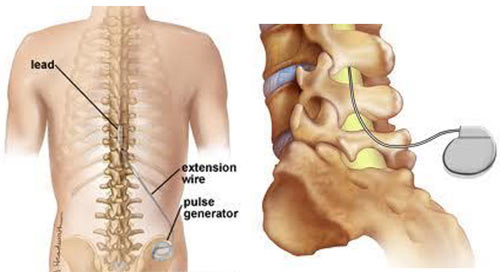
Spinal cord stimulation therapy involves implanting a wire underneath your skin next to your spinal column, at the point of your pain. After a successful test to make sure the device works for you, you can receive the permanent device, which your doctor places under your skin just above your buttocks. The battery-operated device sends electrical impulses to your spine, which hides the pain signals.
The process of placing the wire leads and the device requires several minor surgeries. All are outpatient procedures that are done in our sports pain management clinic in Manhattan. The process involves a number of steps. After determining that you may be a good candidate for spinal cord stimulation therapy, your doctor has to make sure the technique works for you:
If the test device reduced your pain to tolerable levels — the goal is often between 50 and 70 percent reduction — you can receive the permanent spinal cord stimulation device:
While the procedure itself is painless, for the most part, carrying the device can be a bit uncomfortable at first. But if it works, you’ll consider the inconvenience worthwhile. The device is removable in a separate surgery, but you may not desire that if it’s working as well as the test device.

Febin Melepura, MD is a top rated, best in class interventional pain management doctor. He is a nationally recognized pain relief specialist and is among the top pain care doctors in New York City and the country. He is an award winning expert and contributor to a prominent media outlets.
Dr. Febin Melepura has been recognized for his thoughtful, thorough, modern approach to treating chronic pain and, among other accolades, has been named a “top pain management doctor in New York”, and one of “America’s Top Doctors™” for an advanced sports injury treatments.

