
- (212) 621-7746
- text us
- BOOK ONLINE Same Day Appointments
 Back pain comes in many forms. Lower back pain, which you feel anywhere from your hips to your rib cage, has its own causes and treatments. The same is true for middle back pain, which appears between the bottom of your rib cage up to your shoulder blades. Upper back pain can affect the area just below your arms up to your neck. Pain in the upper back may feel like:
To get lasting upper back pain relief, see our doctor. Only by reviewing your symptoms, taking a medical history, and doing some tests can a qualified pain specialist determine the cause of your pain. Treatment for upper back pain depends on getting an accurate diagnosis.
You can feel upper left back pain or upper right back pain. The pain may also feel like it’s coming directly from your spine, in the center of your back. Pain in the upper back can feel like a:
Depending on the type of injury or >illness, other symptoms may appear as well. Remember that your spine protects your spinal cord, the central nerves that reach every part of your body. If a nerve leaving your spine is compressed or otherwise compromised, you may feel pain even in your extremities.
Symptoms include:
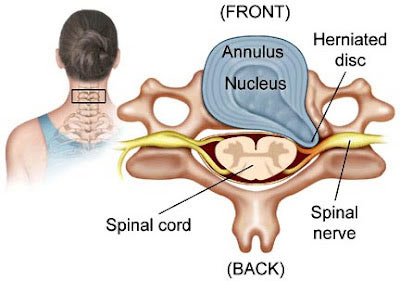
Your spine is composed of vertebral bones that are somewhat shaped like a ring. In the center, your spinal cord runs from the base of your spine up to your brain stem. Between each vertebral bone are discs, which act as shock absorbers. Each disc has a thick outer shell and a soft inner core that can bounce, stretch and move as you move. The discs keep your vertebrae from rubbing against each other.
Treatment for upper back pain — whether for upper right back pain or upper left back pain — hinges on a correct diagnosis. Still, it’s rare that your doctor needs to resort to surgery to provide upper back pain relief. In fact, your upper back pain treatment may begin with over-the-counter non-steroidal anti-inflammatory drugs (NSAIDs), such as aspirin or ibuprofen, or prescription-strength muscle relaxants.
Your sports medicine doctor may also recommend an at-home upper back pain treatment consisting of alternating heat and cold compresses. Certain stretches and exercises can help your muscles relax enough to ease your pain, too. And there’s always physical therapy, massage, and similar mobilization techniques that correct the imbalance between your muscles, ligaments, cartilage, and bones.
Medicines can also help with your back pain. The most common prescription drugs that are used to treat upper left back pain are:
Pain relievers most often used for back pain are:
Possible side effects of these drugs include:
Muscle relaxants most often used for back pain are:
Antidepressants most often used for back pain are:
In severe cases — confirmed with x-rays, CT scans, or magnetic resonance imaging (MRI) tests — your physician offers more invasive, but targeted upper back pain treatments. These treatments involve injecting pain medicine directly where it’s needed most. For example:
These injections use a corticosteroid medication combined with a local anesthetic to kill the pain. The effect of these treatments is temporary, although they generally help ease pain for up to several months. You shouldn’t rely on injections for long-term upper back pain relief. Instead, exercise and physical therapy can keep the pain away for much longer.

Febin Melepura, MD is a top rated, best in class interventional pain management doctor. He is a nationally recognized pain relief specialist and is among the top pain care doctors in New York City and the country. He is an award winning expert and contributor to a prominent media outlets.
Dr. Febin Melepura has been recognized for his thoughtful, thorough, modern approach to treating chronic pain and, among other accolades, has been named a “top pain management doctor in New York”, and one of “America’s Top Doctors™” for an advanced sports injury treatments.

