
- (212) 621-7746
- text us
- BOOK ONLINE Same Day Appointments
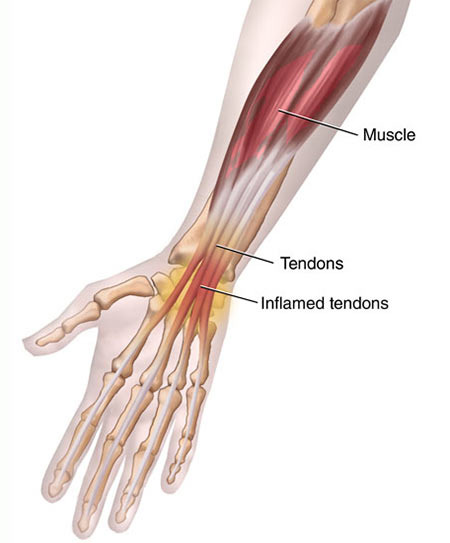 Your muscles connect to your bones by way of tendons, which frequently can become irritated or inflamed due to overuse and repetitive strain. Tendonitis is commonly found in joints and areas that are exposed to extensive exercise or overuse. Tendonitis in wrist problems, however, is most commonly found among athletes within sports that require throwings, such as baseball and football.
Wrist pain due to inflammation is the hallmark of tendonitis. It can vary in severity depending on how your wrist was injured. When working in a job or playing a sport that requires extensive and repetitive use of your wrists, you should be aware of the symptoms of wrist tendonitis to ensure that you don’t hurt your wrist further.
Additionally, you need to seek tendonitis wrist treatment as soon as possible. Instead of suffering from the pain, seek help from your experienced sports and pain management team. They can prevent further complications. Without proper treatment, you could end up with chronic pain and/or crippling disabilities.
Wrist tendonitis is a common but painful condition caused by the repetitive friction, or rubbing together, of the tendons and bones in your wrist. With excessive exercise and extreme training in a sport that involves constant use of your wrists, you’re at risk for wrist tendinopathy or tendon tears. Some symptoms you may experience with tendonitis in wrist include:
If symptoms become severe, be sure to contact your sports medicine physician. He can provide the best treatment for a safe and healthy recovery. Being aware of the causes and symptoms decreases your chance of putting yourself in a position to get wrist tendonitis.
One of the first things your doctor does prior to wrist tendinopathy treatment is to make a diagnosis of the injury based on the description you give of the pain and symptoms you’re experiencing. A physical examination involving stretching your arm to locate the specific place where the inflammation has occurred can also help narrow down the possible causes.
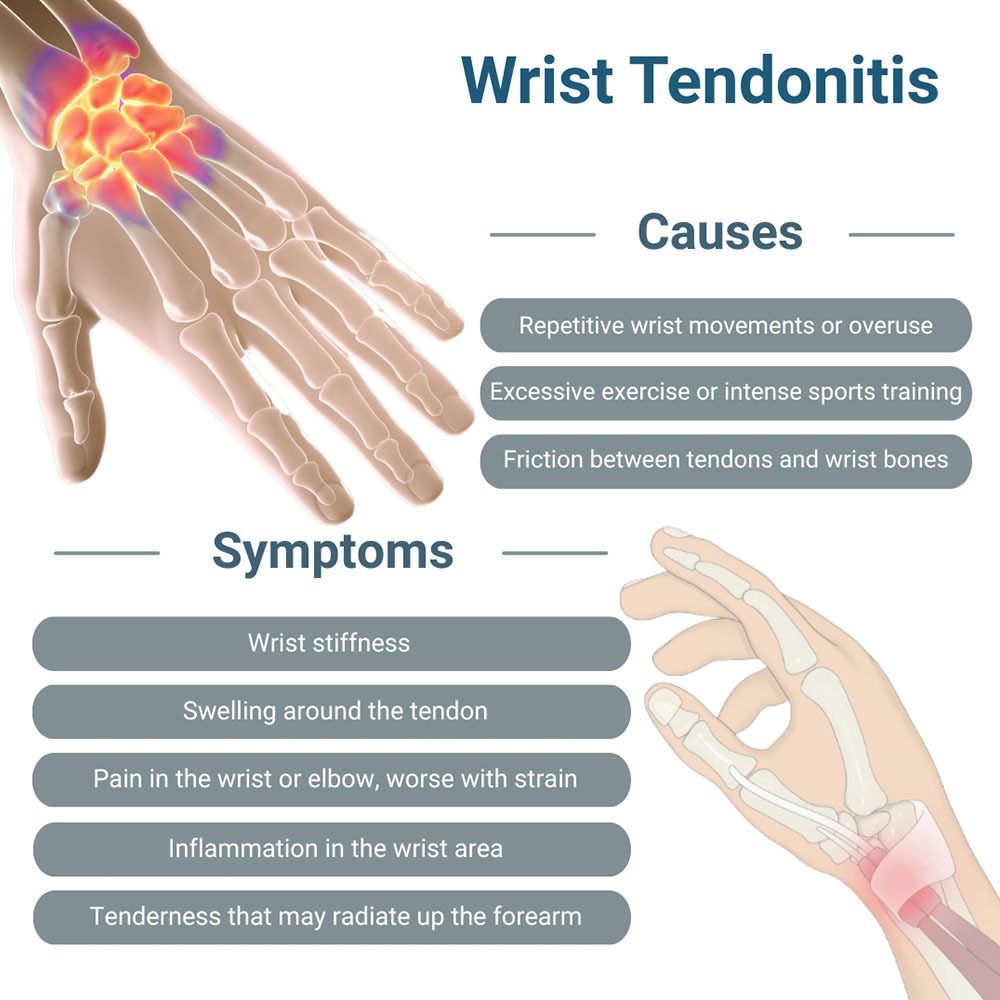
There are many options available to you for tendonitis wrist treatments. But before you jump into invasive and complicated remedies, your Midtown Manhattan doctor first recommends at-home tendonitis in wrist treatment. These simpler techniques include:
If your pain doesn’t respond to your homecare treatments within a week or so, your doctor may advise that you undergo a little more invasive treatment options such as:
Wrist injections can provide immediate and often long-lasting relief, but their use is limited. If you have chronic tendonitis that lasts for more than three months, the steroids may actually prove to be counter-productive as they can weaken your tendon and lead to a rupture.
No matter which treatment you and your doctor land on, however, you must modify your activity to reduce wrist inflammation. At the same time, strengthen your arm to better support your wrists. Protect and strengthen your wrists for peace of mind — and long-term health for your wrists.

Febin Melepura, MD is a top rated, best in class interventional pain management doctor. He is a nationally recognized pain relief specialist and is among the top pain care doctors in New York City and the country. He is an award winning expert and contributor to a prominent media outlets.
Dr. Febin Melepura has been recognized for his thoughtful, thorough, modern approach to treating chronic pain and, among other accolades, has been named a “top pain management doctor in New York”, and one of “America’s Top Doctors™” for an advanced sports injury treatments.

