

Back Pain Exercises: A Complete Guide for Lower, Upper, and Mid-Back Pain
Step 1: Pain Relief & Gentle Movement
Start here if you are in pain or just beginning.


Step 2: Mobility & Flexibility
Loosen tight muscles and improve range of motion.


Step 3: Core Stability & Strengthening
Build strength to support and protect the spine.


Step 4: Advanced & Functional
For when you are pain-free and building full function.


Quick Answer
The best exercises for back pain include cat-cow stretches, bird dogs, hip bridges, pelvic tilts, and modified planks. These movements strengthen the core and posterior chain without loading the spine. Most people can begin within 24–48 hours of onset for acute pain, or immediately for chronic back pain. Avoid sit-ups, double leg raises, and high-impact movements during a flare.
Back pain affects nearly 80% of adults at some point, yet most people either rest too long or return to exercise too quickly. The right exercises — matched to your specific type of back pain — are the fastest route to recovery and the best long-term protection against recurrence.
This guide covers evidence-based exercises for lower, mid, and upper back pain, organised by condition and body region. Browse to the section that matches your situation, or explore our condition-specific exercise programmes below.
Why Exercise Is Essential for Back Pain Recovery
Rest was once the standard prescription for back pain. Current clinical evidence reverses that advice: prolonged bed rest weakens stabilising muscles, reduces disc nutrition, and increases chronification risk. Controlled, progressive movement is now first-line treatment.
What targeted exercise does:
- Strengthens the deep core stabilisers that support the spine (multifidus, transverse abdominis)
- Reduces compressive load on discs and facet joints by improving muscle coordination
- Increases circulation to injured soft tissues, accelerating healing
- Reduces central sensitisation — the neurological component of chronic pain — through graded movement
- Prevents recurrence: strong posterior chain = lower re-injury risk
Important: The exercises below are appropriate for most mechanical back pain. If you have nerve symptoms (shooting pain down the leg, numbness, tingling), a disc injury, or spinal stenosis, read the condition-specific sections before starting.
Lower Back Pain Exercises
Lower back pain exercises target the lumbar spine, sacroiliac joint, and the muscle groups that support them: the core, glutes, and hip flexors. Start with the gentlest movements and progress only when each is pain-free.
Core Stabilisation Exercises
Core stabilisation is the foundation. These exercises activate the deep muscles without loading the spine in dangerous positions.
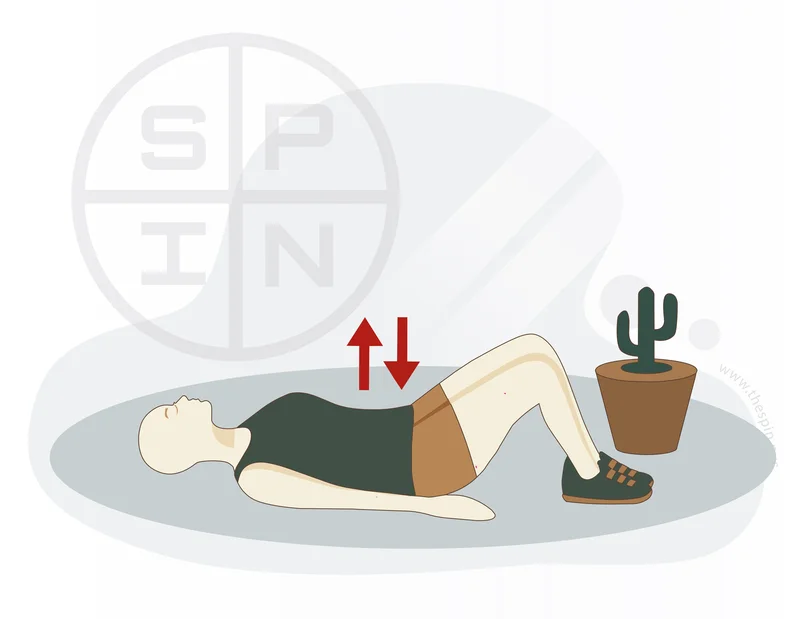
Pelvic Tilt
Lying on your back, flatten the small of your back against the floor by contracting your abdominals. Hold 5–10 seconds. 3 × 10 reps. Zero spinal load — safe for acute flares.
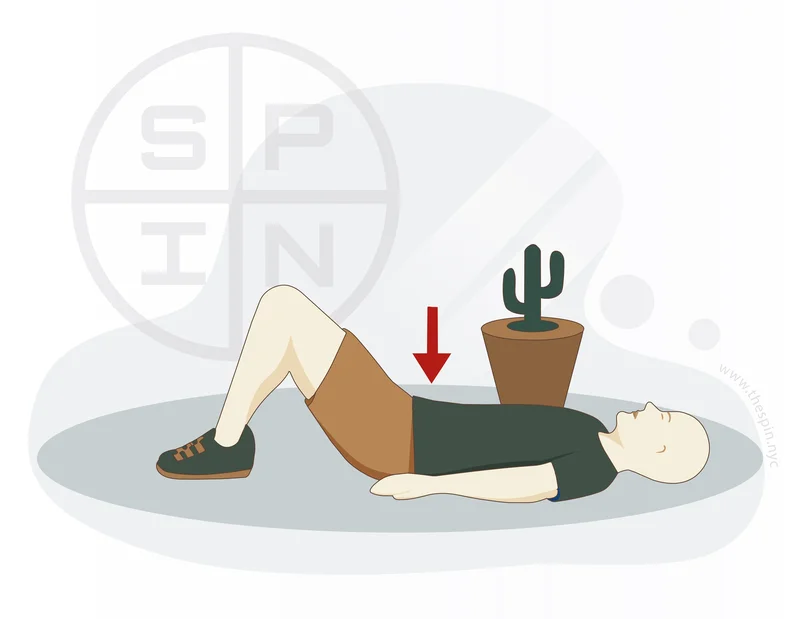
Abdominal Bracing
Activate the deep core (imagine bracing for a punch) without moving the spine. Hold 10 seconds. 3 × 10 reps. Foundation for all other movements.
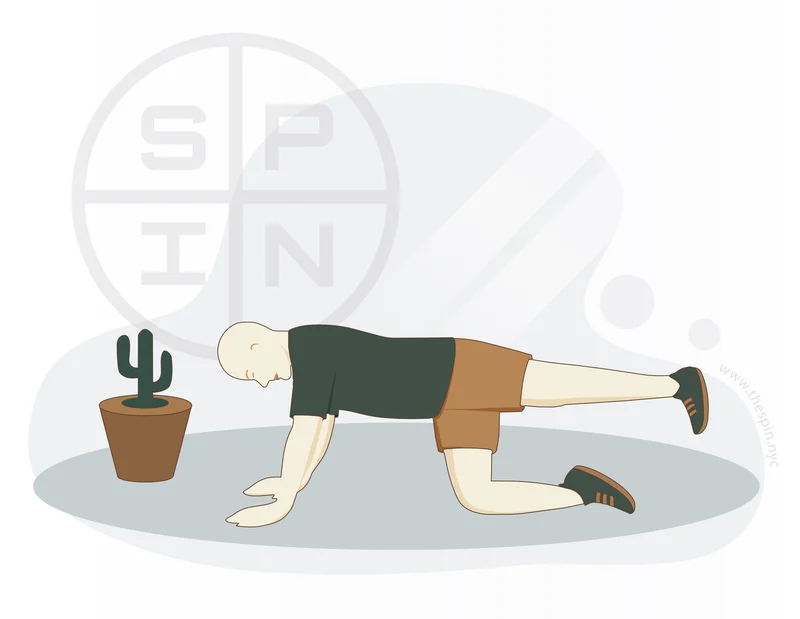
Bird Dog
On hands and knees, extend opposite arm and leg while keeping the spine neutral. Hold 5 seconds each side. 3 × 10 reps. Trains anti-rotation stability.
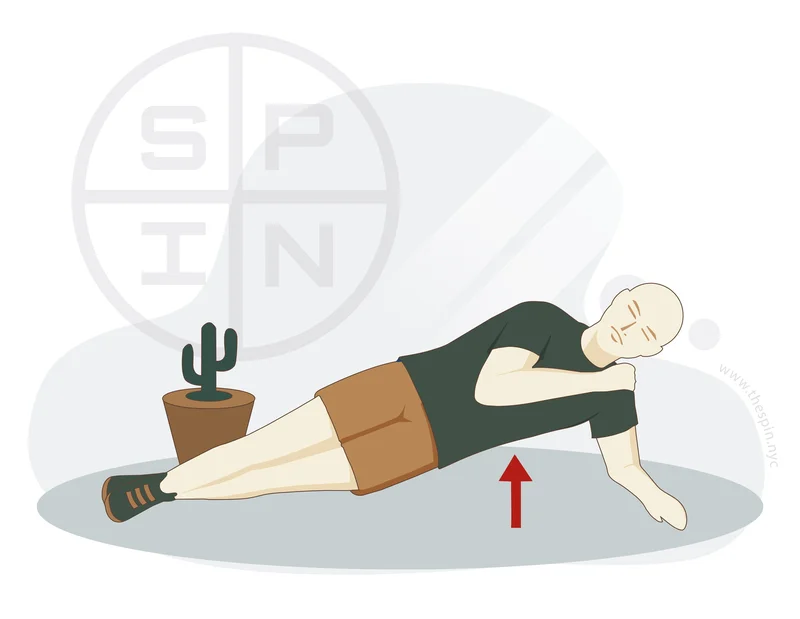
Modified Side Plank
Side-lying, supported on forearm and knees. Hold 20–30 seconds per side. 3 sets. Targets quadratus lumborum and obliques.
Upper Back and Mid-Back Exercises
Upper and mid-back pain (thoracic spine) is most often driven by poor posture, prolonged sitting, and weak scapular stabilisers. These exercises directly target those causes.
Posture and Scapular Exercises
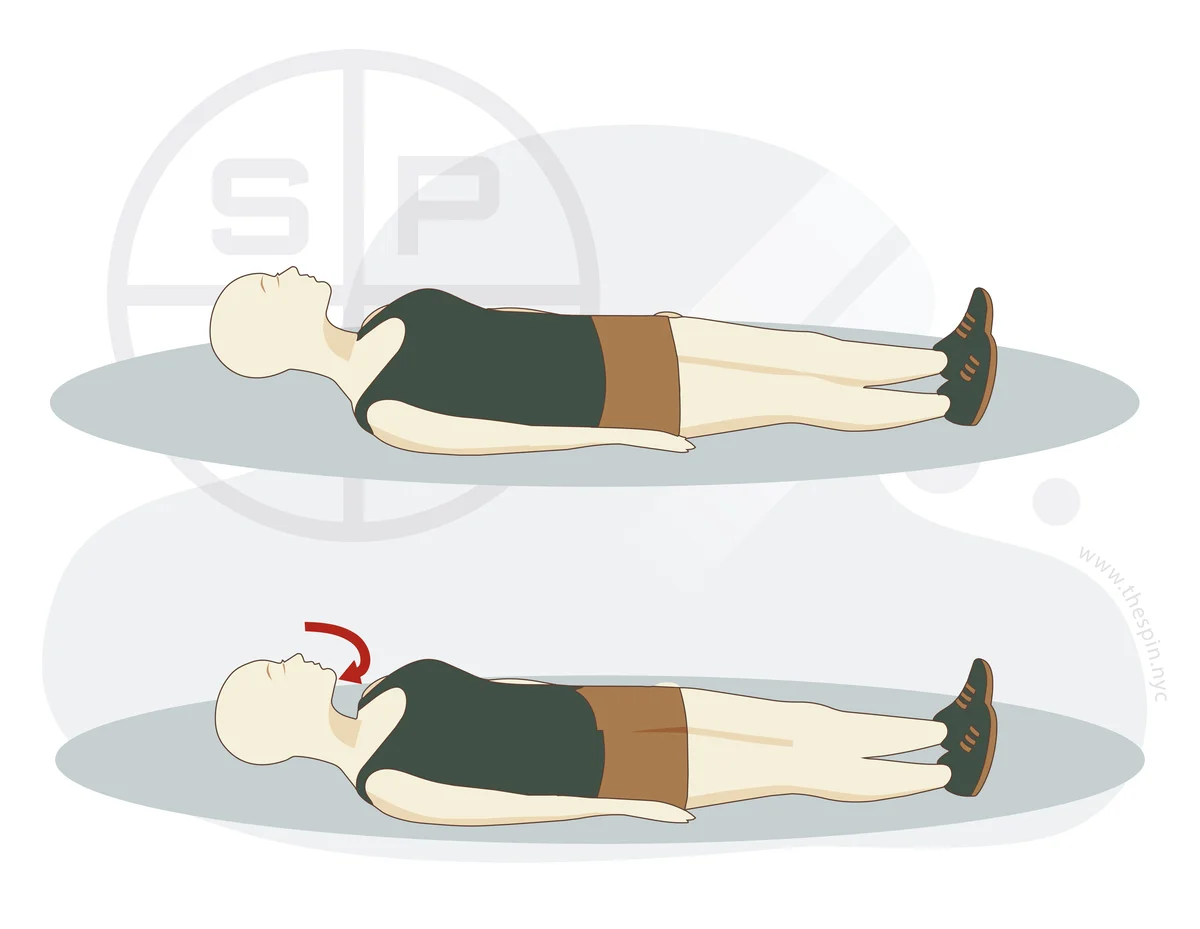
Chin Tuck
Sitting or standing, gently draw the chin back (creating a "double chin"). Hold 5 seconds. 3 × 10 reps. Corrects forward head posture and activates deep cervical flexors.
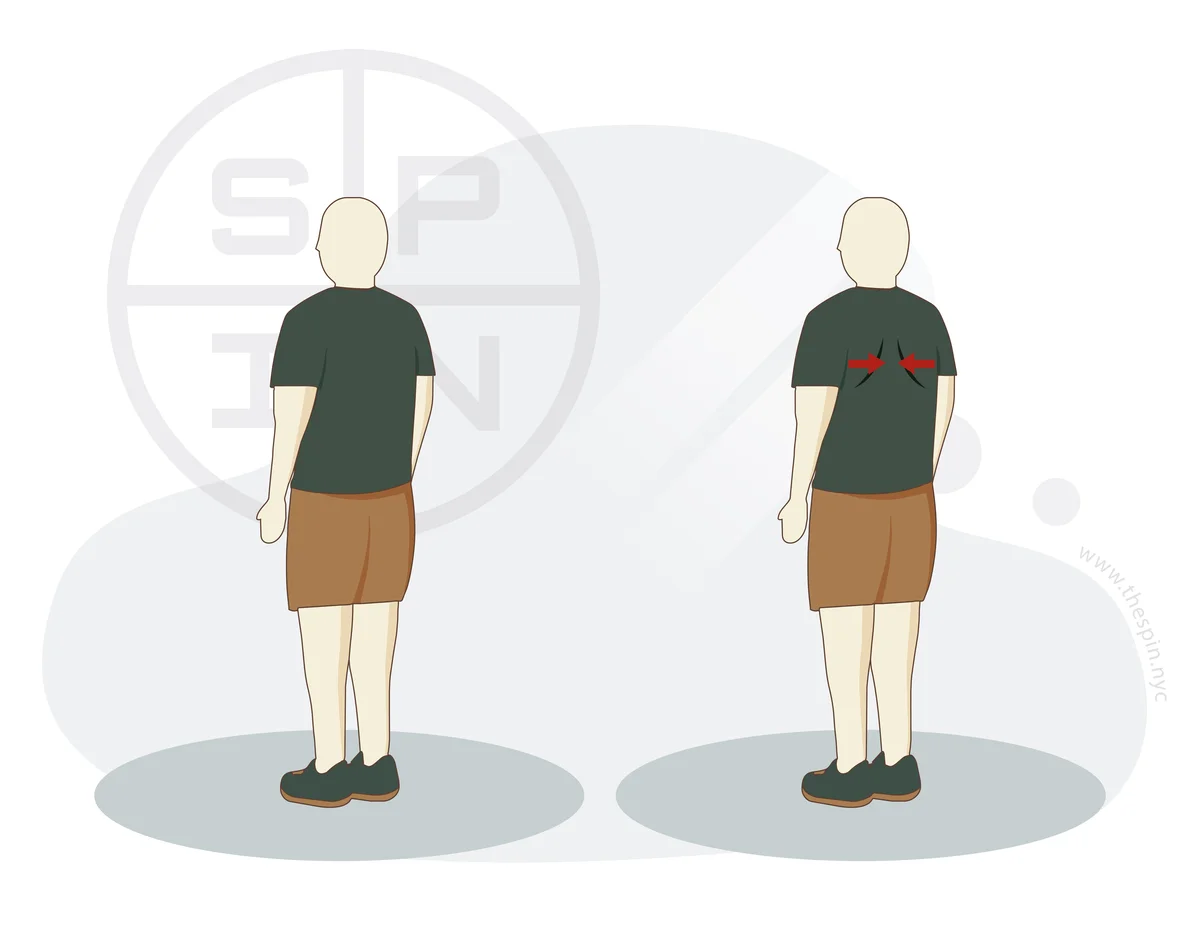
Shoulder Blade Squeeze
Sit or stand tall, squeeze the shoulder blades together and hold 5 seconds. 3 × 15 reps. Directly counteracts hunching.
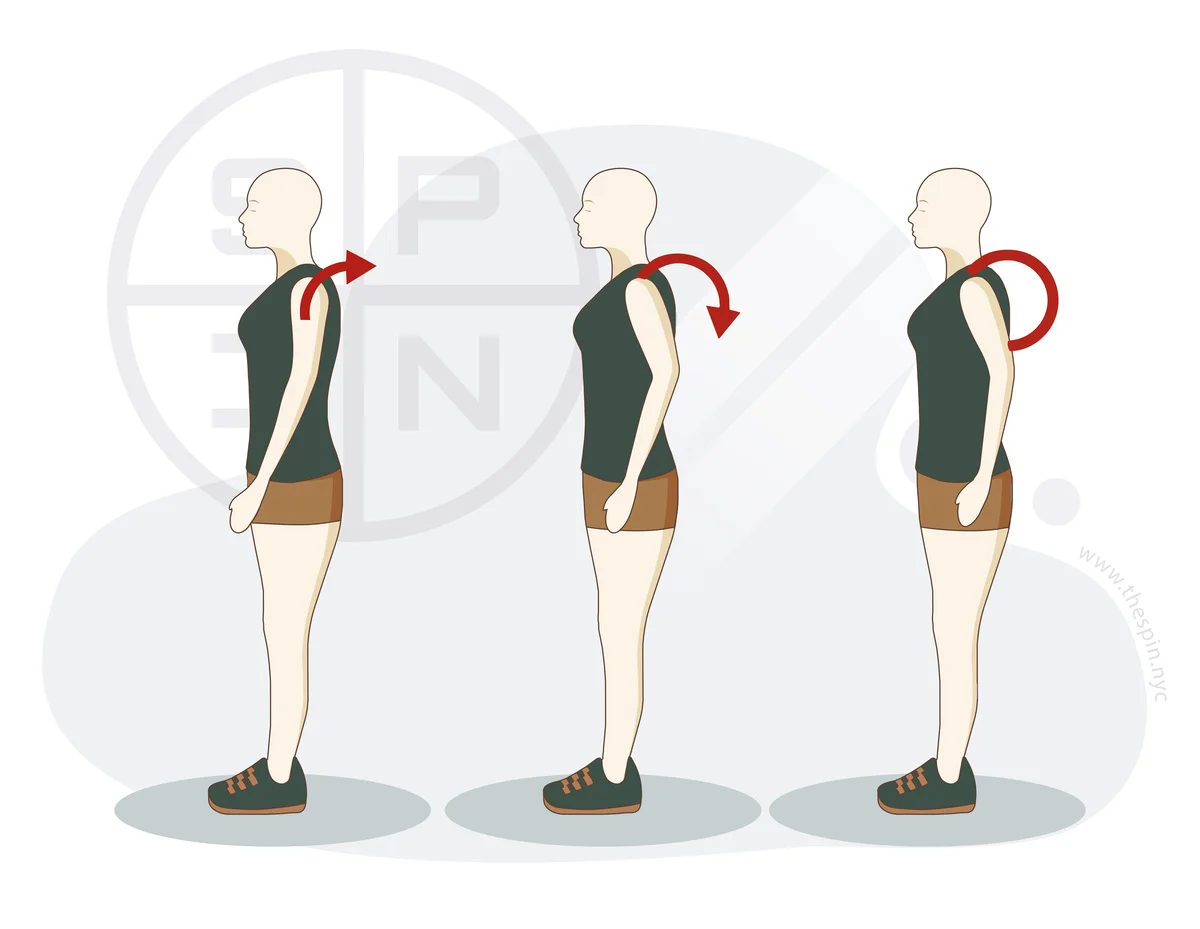
Shoulder Rolls
Gentle circular shoulder movement, 10 forward + 10 backward. Relieves upper trapezius tension.
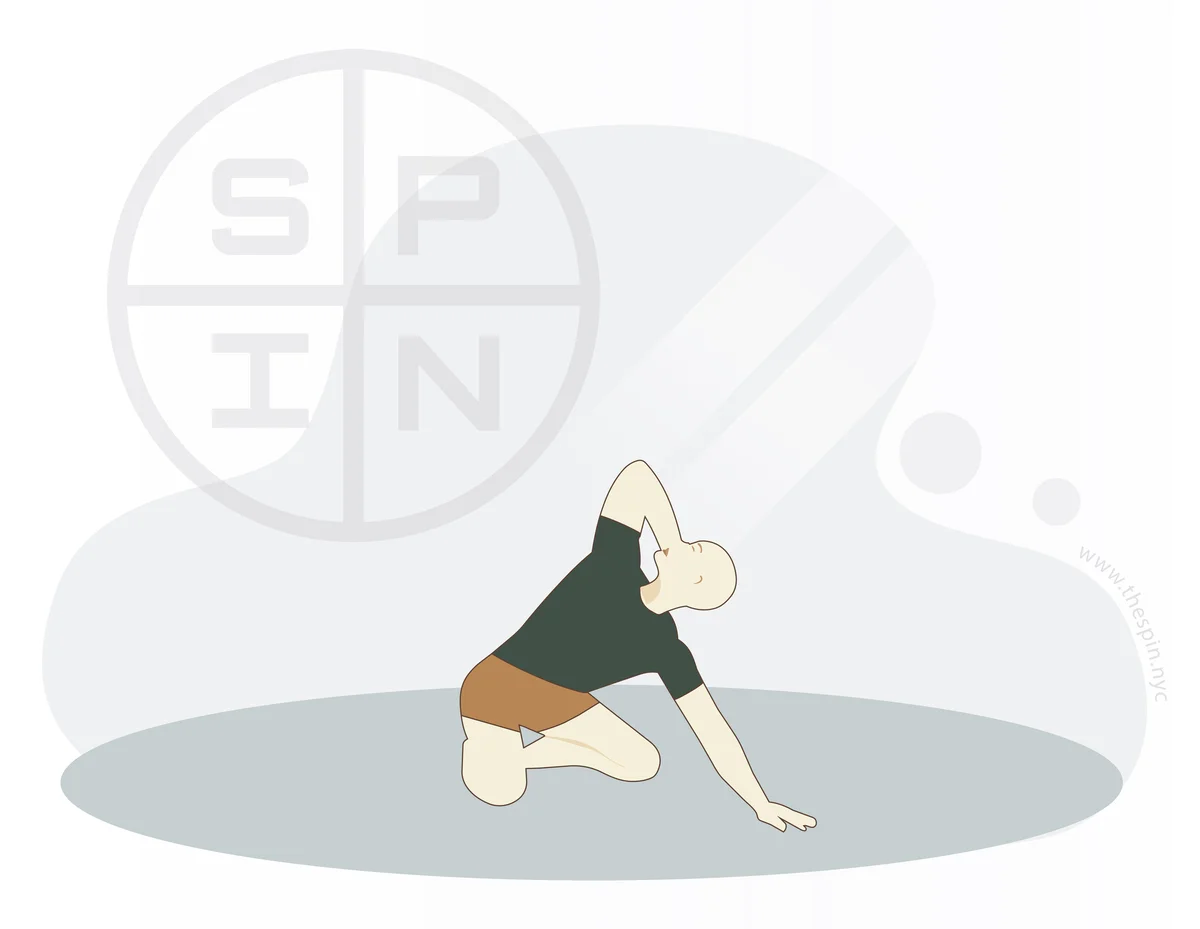
Quadruped Thoracic Rotations
On hands and knees, one hand behind the head, rotate the elbow toward the ceiling. 10 reps each side. Improves thoracic rotation and reduces rib cage stiffness.
Back Pain Exercises by Condition
Different diagnoses require different approaches. Picking the wrong exercises for your specific condition can worsen symptoms — especially with disc injuries and nerve involvement.
Best exercises:
- Press-Up / McKenzie Extension — Most effective for posterior disc herniations with radiating leg pain
- Pelvic tilt and abdominal bracing — Low load stabilisation
- Walking — Low-impact, axially loaded movement; better than rest
Avoid:
- Forward flexion under load (deadlifts, sit-ups, toe touches)
- Seated trunk rotation with load
- High-impact activity during acute phase
Best exercises:
- Cat-cow, knee-to-chest, side stretch — Daily mobility work
- Bird dog, hip bridge, modified plank — Progressive core loading
- Aquatic exercise and low-impact cardio — Excellent for DDD, reduces axial load
Avoid
Avoid: High-impact jumping, repeated axial compression (heavy barbell squats during flares)
Days 1–3 (acute): Pelvic tilt, cat-cow, gentle walking. No rest beyond 48 hours.
Days 4–14 (sub-acute): Add hip bridge, bird dog, abdominal bracing.
Week 3+: Progress to planks, resisted rows, and functional movements.
Best exercises:
- Pelvic tilt and abdominal bracing — Neutral spine stabilisation
- Hip bridge (bilateral, not single-leg initially) — Gluteal activation without SI shear
- Kneeling back extension — Posterior chain without pelvic torsion
Avoid
Avoid: Single-leg exercises, deep asymmetric lunges, loaded trunk rotation during the acute phase.
Best exercises
Best exercises: knee-to-chest, cat-cow (flexion dominant), abdominal bracing, pelvic tilt.
Avoid
Avoid: hyperextension movements (press-ups, cobra pose) during acute flare.
Back Exercises for Desk Workers and Sitting Pain
Prolonged sitting is one of the most common drivers of both lower and upper back pain in NYC office workers and remote workers. These exercises can be done at a desk or during breaks:
Seated pelvic tilt — Gently rock the pelvis forward and back while seated. 10 slow reps, every hour.
Shoulder rolls — 10 reps at the desk; resets the upper trap and levator scapula.
Chin tuck — Correct forward head posture in real time. Can be done at any desk, in any chair.
Seated rotation stretch — Both hands behind the head, rotate the trunk 10 reps each side.
Standing desk transitions — Even standing desks require movement; alternate every 30 minutes.
Back Pain Exercises to Avoid
These are the exercises most commonly recommended that can worsen specific types of back pain:
Sit-ups and crunches
Create high disc pressure (>200% bodyweight at L5/S1 in a sit-up). Not appropriate for any disc or nerve pathology.
Double leg raises
High psoas activation = extreme lumbar flexion stress. Even "core" classes often include these incorrectly.
Straight-leg toe touches
Full lumbar and hamstring flexion under gravity; dangerous for herniated discs.
Loaded trunk rotation (Russian twists with weight)
High torsional disc stress.
High-impact running during an acute flare
Adds axial compression when the disc is already inflamed.
Exercise at home if:
See a doctor if:
Our NYC pain management team provides same-day evaluations for urgent back pain. Accurate diagnosis is what separates the correct exercises from the wrong ones.
Our Back Pain Exercise Programmes
Each programme below was designed by our sports medicine physicians and pain management specialists. The exercises are demonstrated with video guidance and organised by difficulty level.

Back & Upper Back Exercises
Comprehensive self-care routines for general back and upper back pain. Includes posture correction, mobility work, and progressive strengthening.
Lower Back Exercises
Targeted lower back and lumbar spine rehabilitation exercises: pelvic tilt, cat-cow, bird dog, hip bridge, plank progression, and more.
Neck & Upper Back Exercises
Exercises for the cervical-thoracic junction: chin tuck, shoulder blade squeeze, upper trap stretch, resisted rows. Especially effective for desk-worker-related upper back and neck pain.

Sitting & Posture Exercises
Movements specifically designed for people who sit for long periods. Can be performed at a desk, in a chair, or during work breaks.
Conclusion
The right exercises for back pain are specific — to your condition, your level of pain, and your fitness baseline. The movements in this guide cover the most evidence-based options for lower, upper, and mid-back pain. Start gently, track your symptoms over 48–72 hours, and progress only when each movement is pain-free.
If symptoms include leg pain, numbness, or tingling — or if home exercise is not improving your pain within two weeks — book a consultation with our sports pain specialists in NYC. A precise clinical diagnosis, not a self-managed guess, is what allows the correct rehabilitation programme to be prescribed.
Frequently Asked Questions
The most evidence-supported exercises for lower back pain are pelvic tilts, cat-cow stretches, bird dogs, hip bridges, and modified planks. These strengthen the core and posterior chain without loading the lumbar spine in risky positions. For disc-related pain, McKenzie press-ups are also highly effective.