

Lumbar Radiculopathy Treatment in NYC
Medically reviewed by Dr. Febin Melepura, MD · Last reviewed November 3, 2026
Lumbar radiculopathy treatments typically are designed to help you feel better and maintain your current level of activity. Treatment of lumbar radiculopathy can include lifestyle changes and regular exercise aimed at keeping you flexible, and may also require long-term pain relief and even surgery. Come to our sports injury and pain management clinic to get your pain evaluation and treatment. Meet our pain doctor Febin Melepura M.D. to get the pain relief you need in the safe, reassuring hands of the best sports pain management specialists in NYC.
Break it down. Lumbar means lower back, and radiculopathy is the pathology of a nerve root. This basically means it's a pinched nerve in your back, which may also resemble sciatica symptoms. Lumbar radiculopathy is commonly the result of a disc problem like inflammation or wear and tear. A pinched root higher up, at L2 to L4, can send pain to the front of the thigh instead. Read about upper lumbar nerve roots and groin pain.
Sciatica is pain that radiates from your back and down your leg. This commonly happens in people between the ages of 30 and 50, but it can happen to anyone. While it can occur without warning, it often follows an injury. If you're feeling worried, take comfort in knowing there are several lumbar radiculopathy treatments. If the pain travels down the leg, a sciatica specialist in NYC can confirm whether the nerve root is involved.
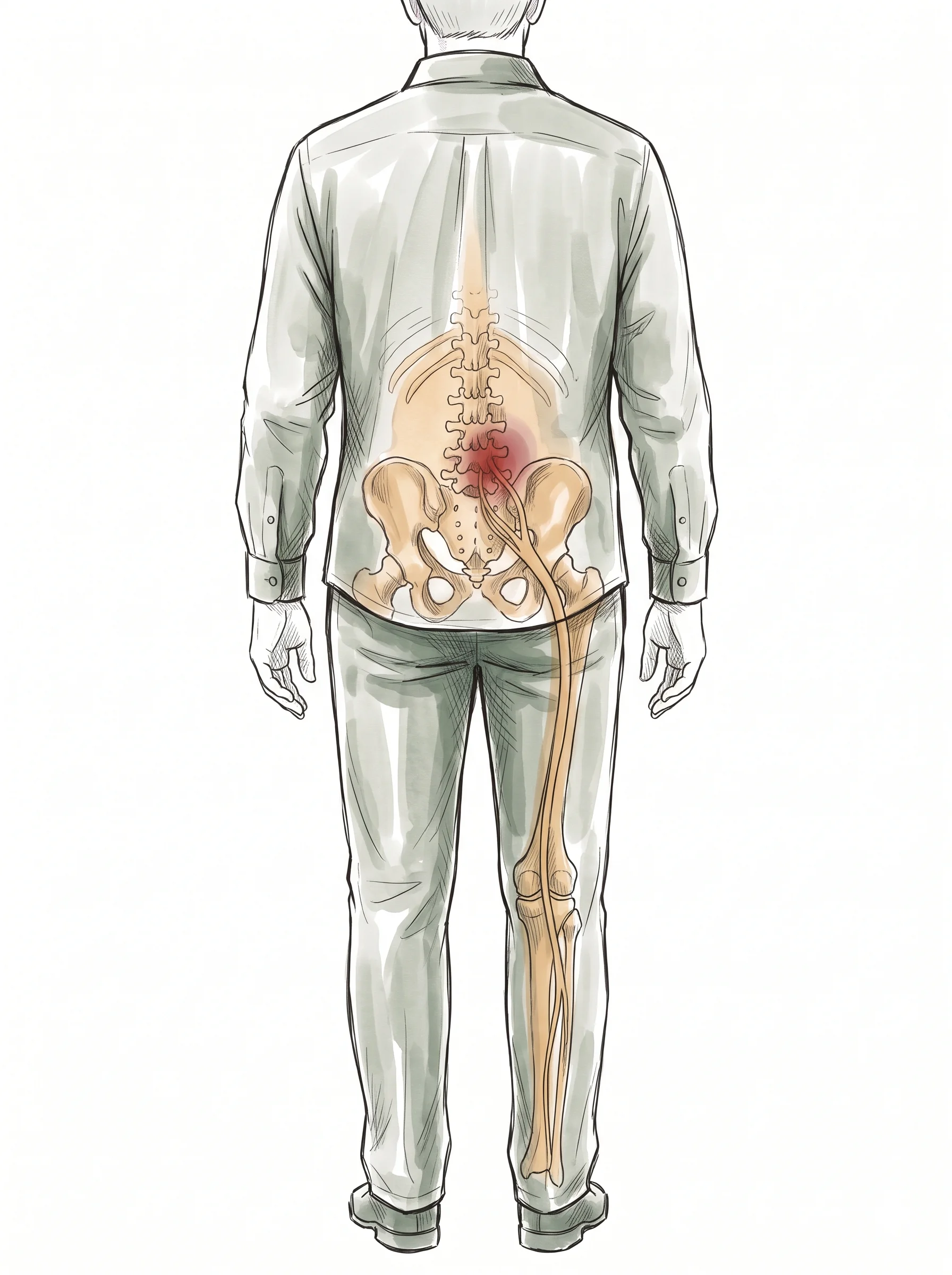
Lumbar Radiculopathy NYC · SPIN Sports Pain Specialists
Ready to find relief from lumbar radiculopathy?
Same-day appointments available in Midtown Manhattan.
Discover if You Need Lumbar Radiculopathy Treatments
The easiest way to find out if you need treatment for lumbar radiculopathy is to ask yourself if you have back pain, and then narrow it down to pain in the lower back and/or pain in your leg. Visit your Manhattan sports medicine doctor for a more definitive diagnosis. For starters, he'll look for: If it persists beyond a couple of weeks, a back pain doctor in Midtown Manhattan can pinpoint the source before it becomes chronic.
Any nerve coming out of your lower spine can be affected by lumbar radiculopathy. Generally, the pain stays on one side. It's usually described as a sharp or searing pain, instead of a dull or aching pain. If you experience these symptoms, seek medical care and start on the path of lumbar radiculopathy treatment.
What Causes Lumbar Radiculopathy?
The symptoms are a direct result of various causes. One cause may be disease. But more commonly, it's the result of a structural problem. For example, another possible cause is a pinched nerve that stems from spinal nerve roots.
This makes the recommended treatment for lumbar radiculopathy non-surgical at first. Common factors that lead to lumbar radiculopathy include:
Age, age-related diseases and degeneration
Congenital spine issues
Overly thick ligaments
Other spinal conditions, like bone spurs or disc herniation
Inflammation
Repetitive movements from heavy lifting, manual labor or other highly physical activities
Contact sports such as football and hockey
Lumbar Radiculopathy at L4-L5 and L5-S1
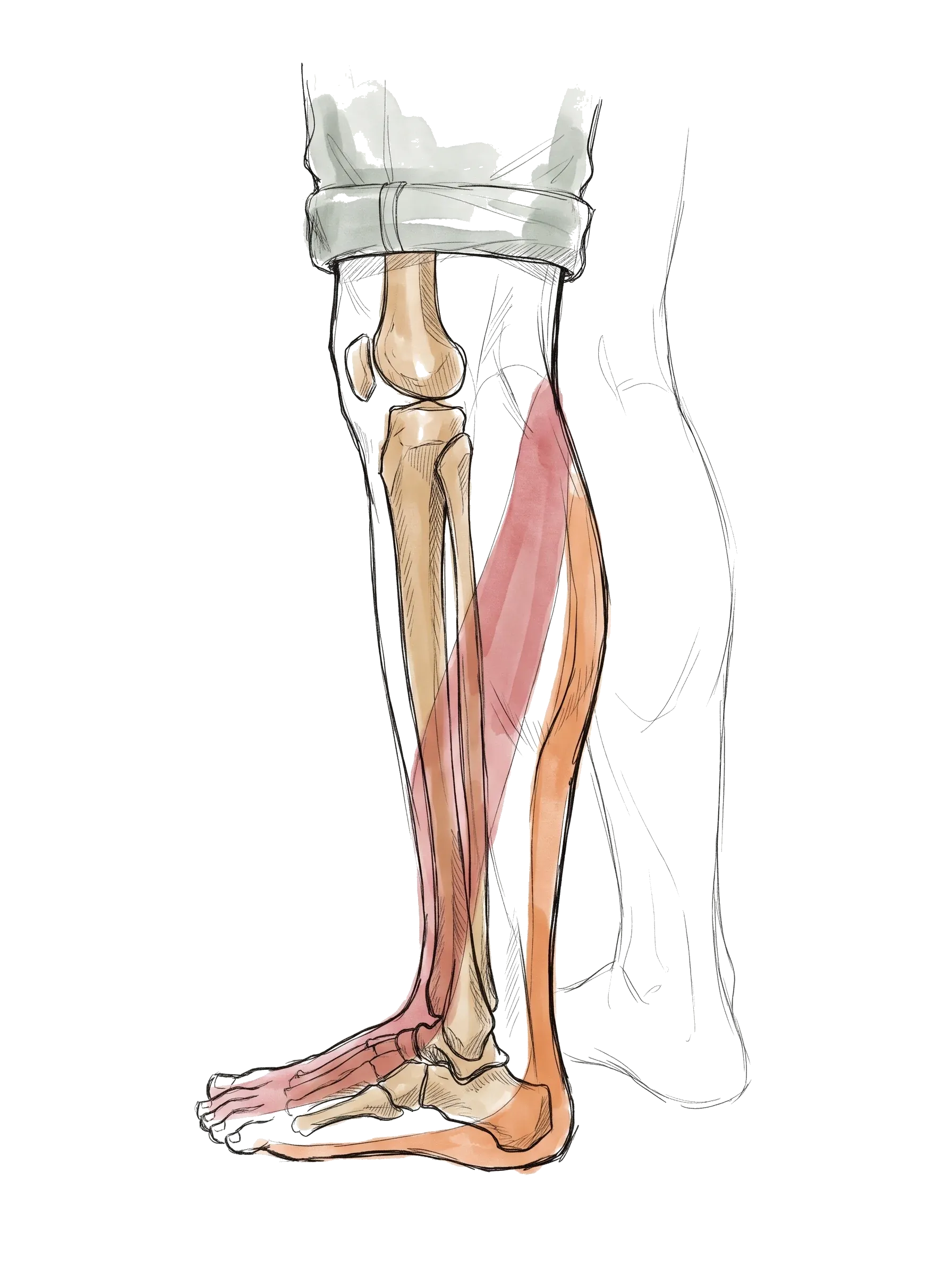
L4-L5 and L5-S1 are the two levels most often involved, because they take the most load and the discs there wear first. The level matters because it decides where the symptoms land: an L4-L5 root tends to send pain along the outer calf and into the top of the foot, while L5-S1 runs down the back of the calf toward the heel. Which nerve root is involved is worked out from your examination and your MRI, not from where the pain feels worst.
Diagnosis Is the Key to Feeling Better
Lumbar radiculopathy treatment starts with being diagnosed by a leading New York City sports medicine professional with pain management experience.
If you're experiencing symptoms, be prepared to talk about your medical history and have a thorough physical. Your doctor looks for limitations in movement of your spine. Other characteristics that your doctor looks for include balance issues, muscle weakness and abnormal reflexes.
The doctor can also order an x-ray or MRI image of your lower spine to confirm the diagnosis. There are other options if you have a pacemaker or stimulator. If your condition is serious enough, you may be asked to take a nerve test or electromyography (EMG). After the diagnosis, your treatment for lumbar radiculopathy varies.
What's the Treatment for Lumbar Radiculopathy?
With many non-invasive options for lumbar radiculopathy treatments, doctors usually opt for medication or therapy. When the pain does not settle, a lumbar epidural steroid injection reduces inflammation around the irritated nerve root, which relieves pain and lets you get back to physical therapy. Treatment can be as easy as reducing pain and swelling with oral medication. Other medicine options include:
Typically, doctors lean towards the non-surgical treatment of lumbar radiculopathy. Before surgery is even considered, your doctor may try:
Spinal decompression

Temperature treatments to stimulate blood flow

Limiting activity
Physical therapy
Physical therapy is a great first step toward easing your pain from lumbar radiculopathy. Your physical therapist may work on improving your posture and provide basic exercises. Certain stretches improve flexibility and strengthen your lower back. The therapist can also teach you to remain safe and avoid additional injury by reducing pressure on the spine.
Lumbar Radiculopathy Recovery Time
Many people improve within four to six weeks, though some take a few months, and the first few weeks are usually the worst of it. Recovery is rarely a straight line: a good week followed by a flare is normal and does not mean the treatment has failed. What matters more than the week-by-week pattern is the direction of travel over a month, and whether any weakness is improving rather than spreading.
Managing the Pain
Before surgery is considered, a diagnostic nerve block can confirm which root is responsible. If you've tried everything else, or your doctor feels it's medically necessary, surgery is an option. While there are several options for surgical treatment, it's a last resort, used only to treat people with severe pain, mobility issues, or difficulty going to the bathroom. Surgical options for lumbar radiculopathy range from a simple discectomy to chemonucleolysis, which involves dissolving some of the inflamed cushioning between disks.
The best form of pain management is to keep exercising lightly and avoid the activities that cause you the most pain. Taking walks and avoiding long periods of bed rest ensure your symptoms don't worsen. Stick to the normal range of motion activities, and avoid heavy lifting. Keep the area in pain moving, but not stressed. You want to help yourself, not hurt yourself.
Ready to find relief from lumbar radiculopathy?
Dr. Melepura's Midtown Manhattan clinic offers same-day appointments for evaluation and treatment.
100+ Real Stories from Our Patients



Dr. Febin Melepura, MD
Double Board-Certified Pain Specialist
Meet Dr. Febin Melepura: Your Lumbar Radiculopathy Specialist in NYC
Dr. Febin Melepura, MD is a double board-certified interventional pain management specialist and the founder of the Sports Pain Institute of New York. He completed his residency and fellowship training at New York Presbyterian Hospital / Columbia University Medical Center, one of the nation's leading academic medical centers.
He holds dual board certifications from the American Board of Anesthesiology and the American Board of Pain Medicine, and has treated more than 7,500 patients and performed over 5,250 procedures throughout his career. He has been named a Top Pain Management Doctor in New York and one of America's Top Doctors™ by Castle Connolly.
Dr. Melepura's approach to lumbar radiculopathy is rooted in precision: identify the exact source, treat it with a targeted injection, and get you back to your daily life as quickly as possible.
1,700+ Patient Reviews

"Able to make an appointment to see Dr. Melepura on short notice… attentive to my concerns… Jazmin was also very kind and helpful."

"Excellent hospitality, listener and explainer… highly recommend the doctor and the place."
"Dr. Melepura is the best! He worked with me to find the optimal solution to my shoulder pain while I was preparing for a fight!"
"Lovely, bright and modern… doctor and staff were kind… felt my concerns were heard."
"Helpful and friendly staff who gladly follows up with you if and when needed. Dr Melepura was very helpful and professional as well as provided me with excellent information and feedback."
"Dr Febin is fantastic! Highly recommend him and his practice the Spin clinic. The doctor is a good listener, kind, attentive and gave me great advice. "
"Dr.Melepura was very efficient and interpersonal, felt like he was understanding the problems I was having and explained the processes to take to rehabilitate. I would recommend."
"I felt listened to and truly understood by Dr. Melepura. Started PT the very next day. They were very friendly and I didn't feel rushed at all. Already recommended them to my friends who have or continue to play through pain."
Frequently Asked Questions About Lumbar Radiculopathy
Many cases improve within four to six weeks with conservative treatment, though some take longer. If the pain has not eased by then, or any weakness is getting worse, see a specialist.
Not quite. Sciatica describes the symptom, pain running down the leg. Lumbar radiculopathy names the cause, an irritated nerve root in the lower back.
It names which nerve root is involved. L4-L5 and L5-S1 are the two lowest levels and the ones most often affected, which is why symptoms so often reach the calf and foot.
Often yes, particularly when a disc herniation is the cause and it is still resolving. Treatment is aimed at keeping you moving while that happens.
Rarely, and not first. Surgery is considered for weakness that is worsening, or for pain that has not responded to injections and therapy over several months.
There is no instant fix, and staying gently active helps many people. When the pain is severe or not settling, a lumbar epidural steroid injection reduces inflammation around the irritated nerve root, which relieves pain and lets you get back to physical therapy. Many patients notice meaningful improvement within 3 to 7 days.