What Sciatica Actually Is, and Where It Travels
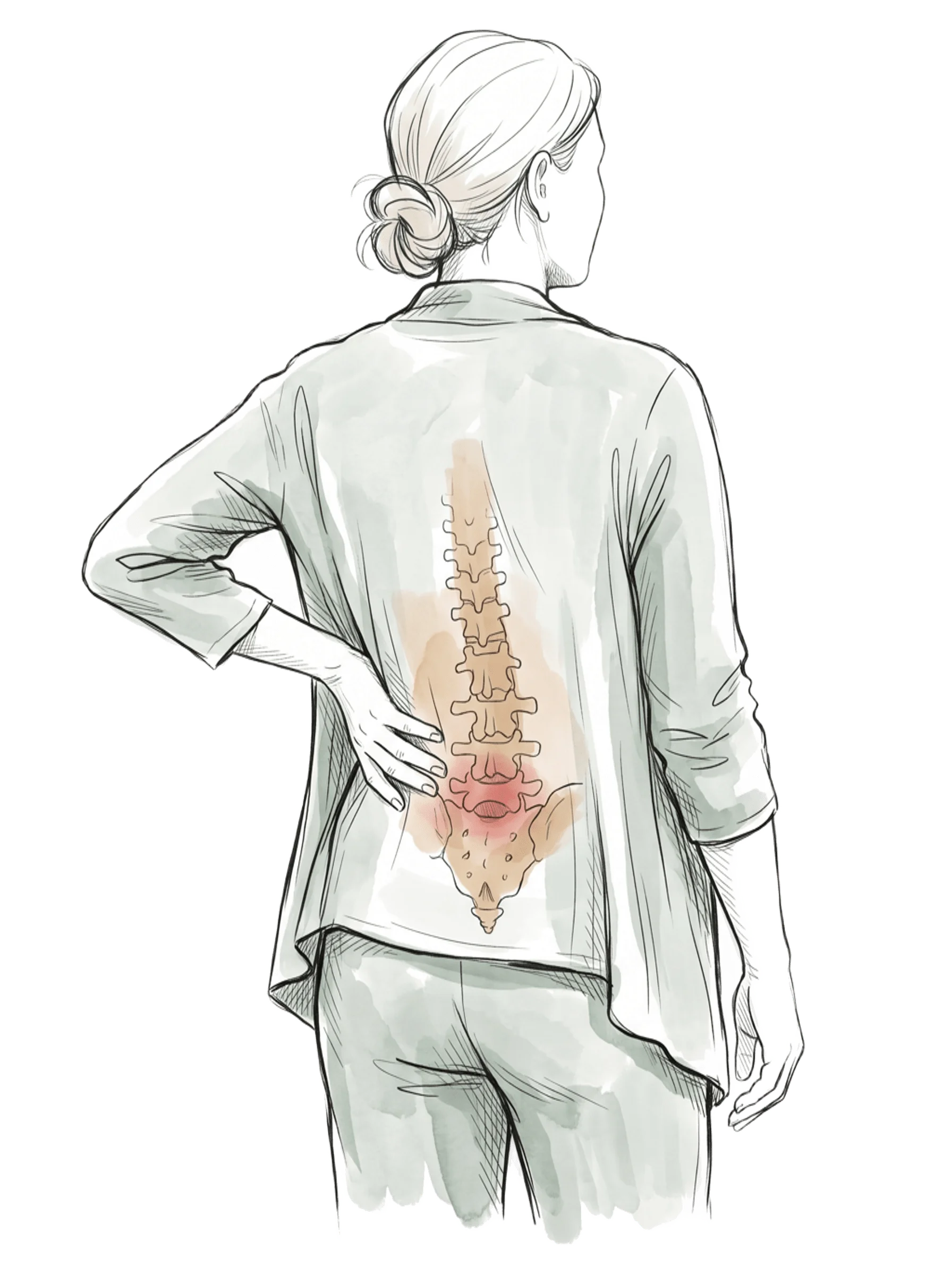
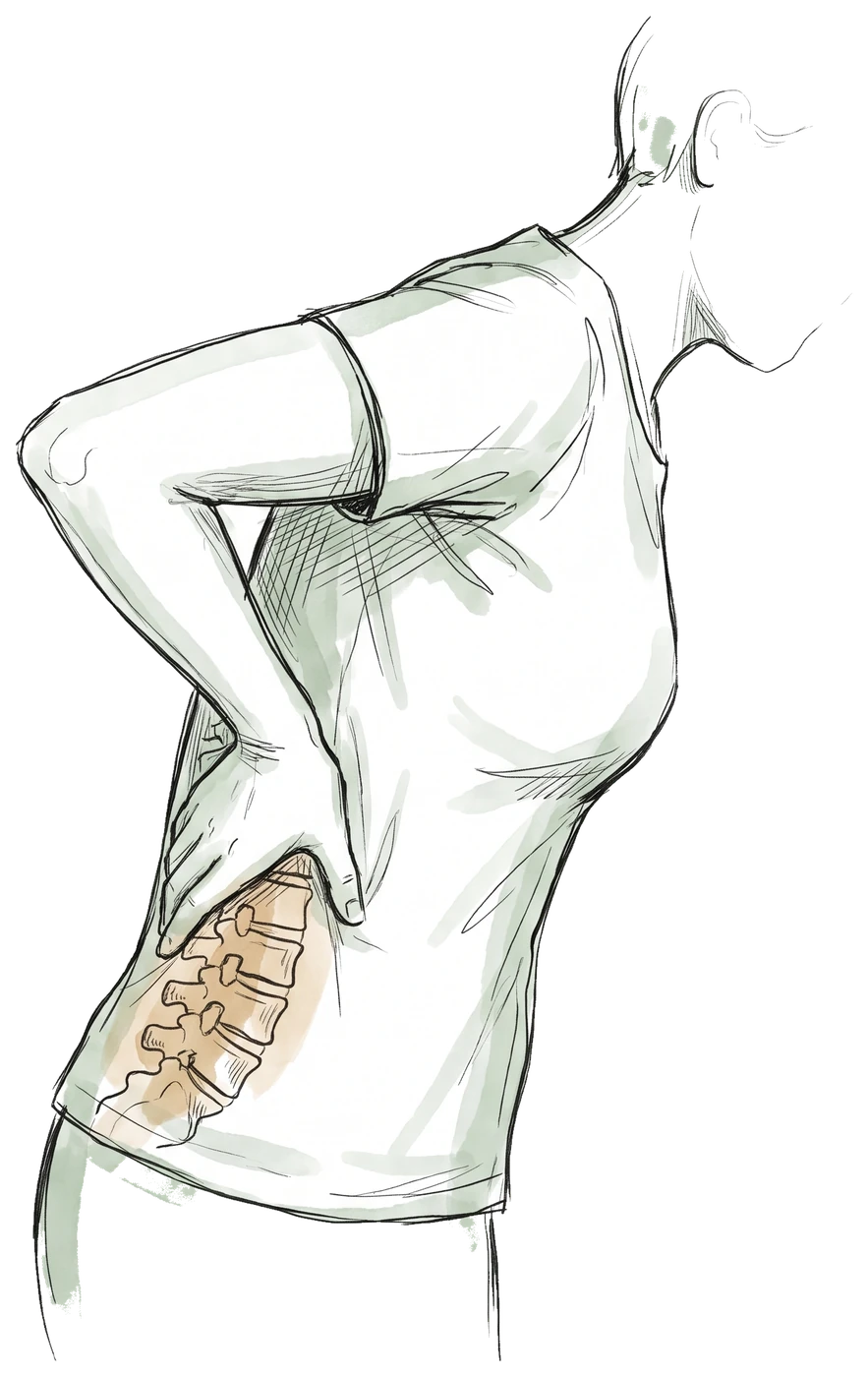
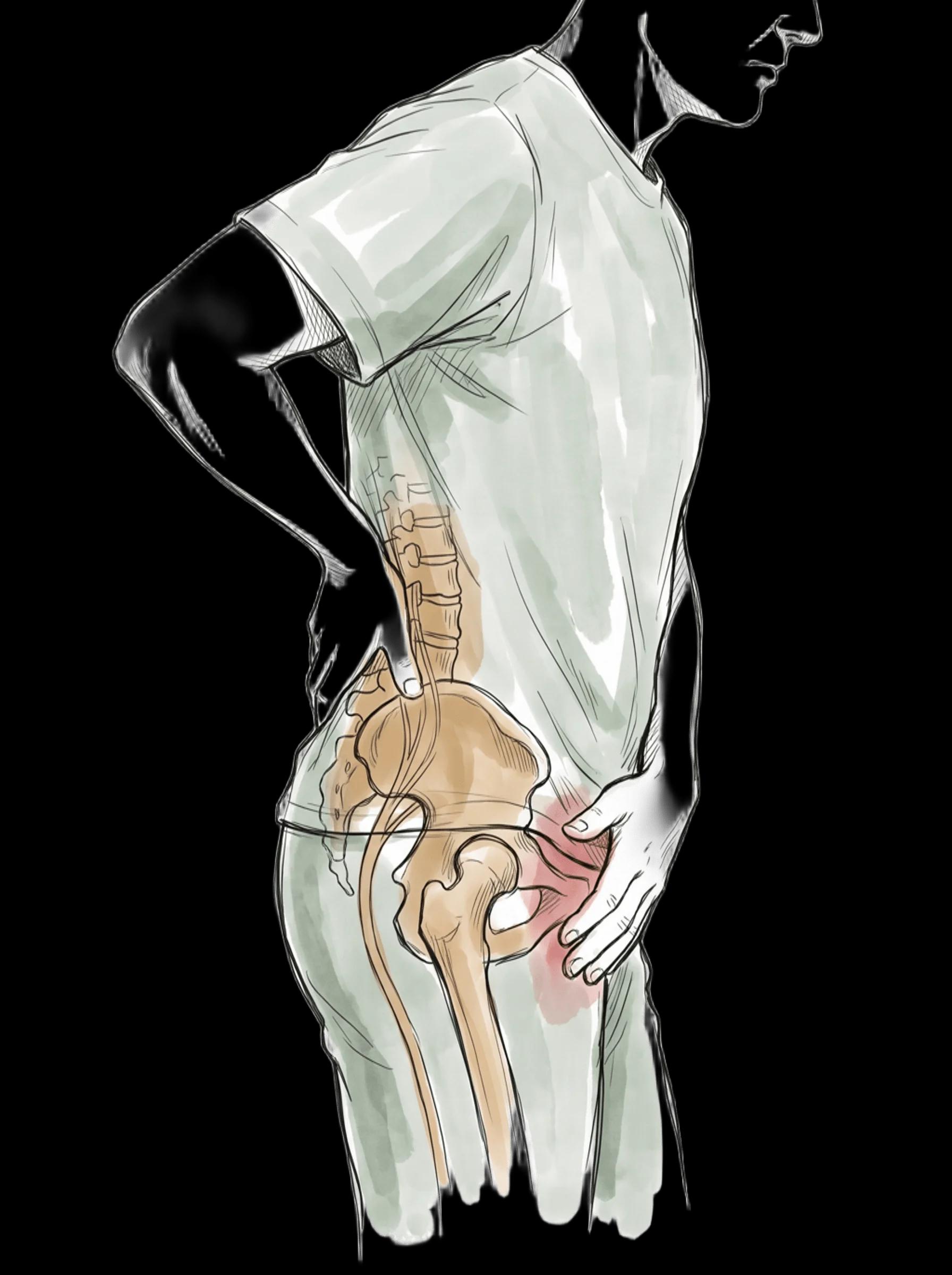
Sciatica is not a diagnosis in itself. It describes what happens when a nerve root in the lower spine is compressed or irritated, most often by a herniated disc or by spinal stenosis narrowing the space the nerve passes through.
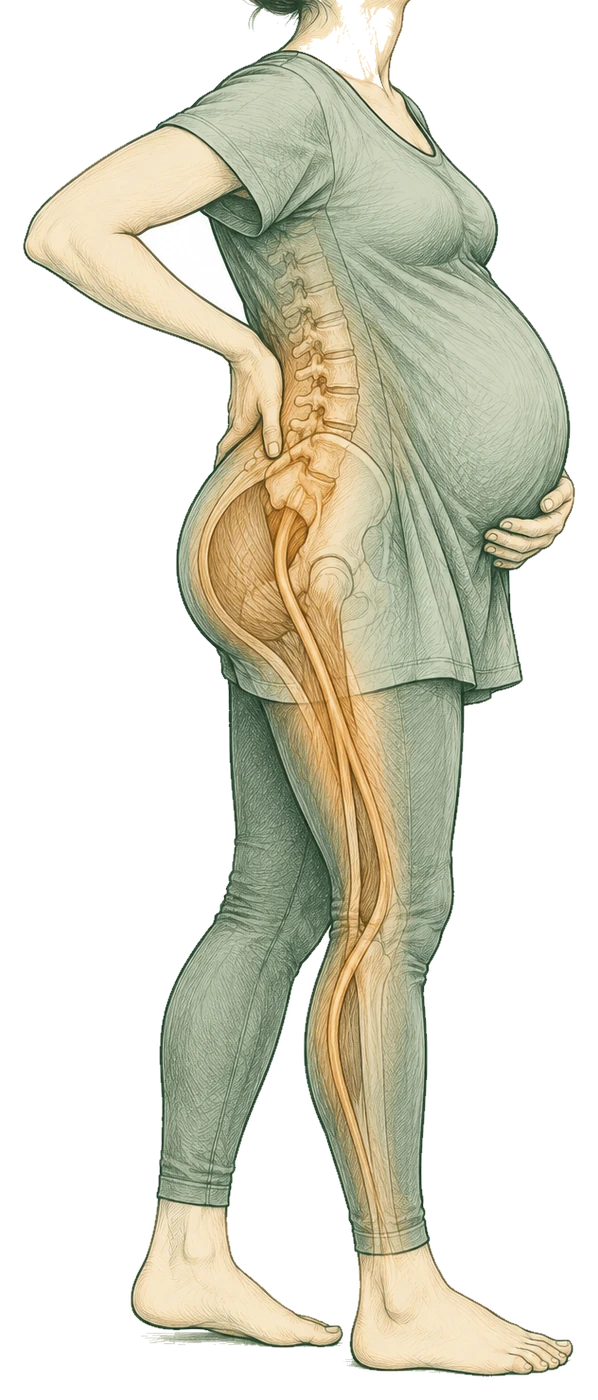
The pain has a recognizable route. It starts in the lower back or buttock and radiates down the back of the thigh and into the leg. People describe it as sharp, knife-like or electrical, often with pins and needles, burning or weakness down the same leg, and it is usually on one side.
What it does not typically do is travel into the groin. The sciatic nerve supplies the back of the leg, not the front of the pelvis, so the groin sits outside its territory.
Why Groin Pain Usually Points to the Hip
Groin pain is the classic presentation of a problem inside the hip joint. The American Academy of Orthopaedic Surgeons lists pain in the groin as the most common symptom of hip osteoarthritis, often spreading to the thigh, the buttock or the knee.
Research supports the same pattern. A study comparing patients with hip disease against patients with spine disease found that a limp, groin pain, or limited inward rotation of the hip each significantly predicted that the problem was coming from the hip rather than the spine.
This matters because hip problems and spine problems often coexist. When both are present, treating the wrong one is what leads to months of injections and therapy that do not help.
What Usually Causes Groin Pain Alongside Back or Hip Symptoms
1. Hip Osteoarthritis: Wear in the cartilage lining the hip joint. Pain builds slowly, sits in the groin, and is often worse in the morning or after sitting. Stiffness and reduced range of motion are typical, and many people develop a limp before they think the pain is severe enough to act on.
2. Hip Labral Tear and Impingement: The labrum is the ring of cartilage around the hip socket. A labral tear, often alongside femoroacetabular impingement, causes groin pain with clicking, catching, or a sense that the hip is locking. It is more common in younger, active patients than arthritis is.
3. Upper Lumbar Nerve Roots: Not every irritated nerve root produces sciatica. The L2, L3 and L4 roots supply the front and inner thigh through the femoral and obturator nerves, so compression there can reach the groin. This is a lumbar radiculopathy, but it is not sciatica, and it is far less common than the lower root problems that cause sciatica.
4. Sacroiliac Joint Dysfunction: The sacroiliac joints connect the spine to the pelvis. SI joint pain usually sits low and to one side, felt more in the buttock than the back, and it can refer forward into the groin.
5. Hip and Groin Muscle Strain: An adductor or hip flexor strain produces groin pain that is sharp with specific movements and tender to press on. It usually follows a recognizable moment, a sprint, a kick or a slip, rather than building gradually.
6. Inguinal Hernia: Tissue pushes through a weak spot in the abdominal wall, producing a bulge and an aching or burning discomfort in the groin that is worse with coughing, lifting, or standing for long periods. This one is not a spine or joint problem at all, which is why it is worth ruling out early.
7. Facet Joint Referral: The small paired joints at the back of each spinal segment can refer pain into the buttock, the hip and occasionally the groin. Facet joint pain tends to be worse leaning backward and easier leaning forward.
How to Tell If It Is Sciatica or Your Hip
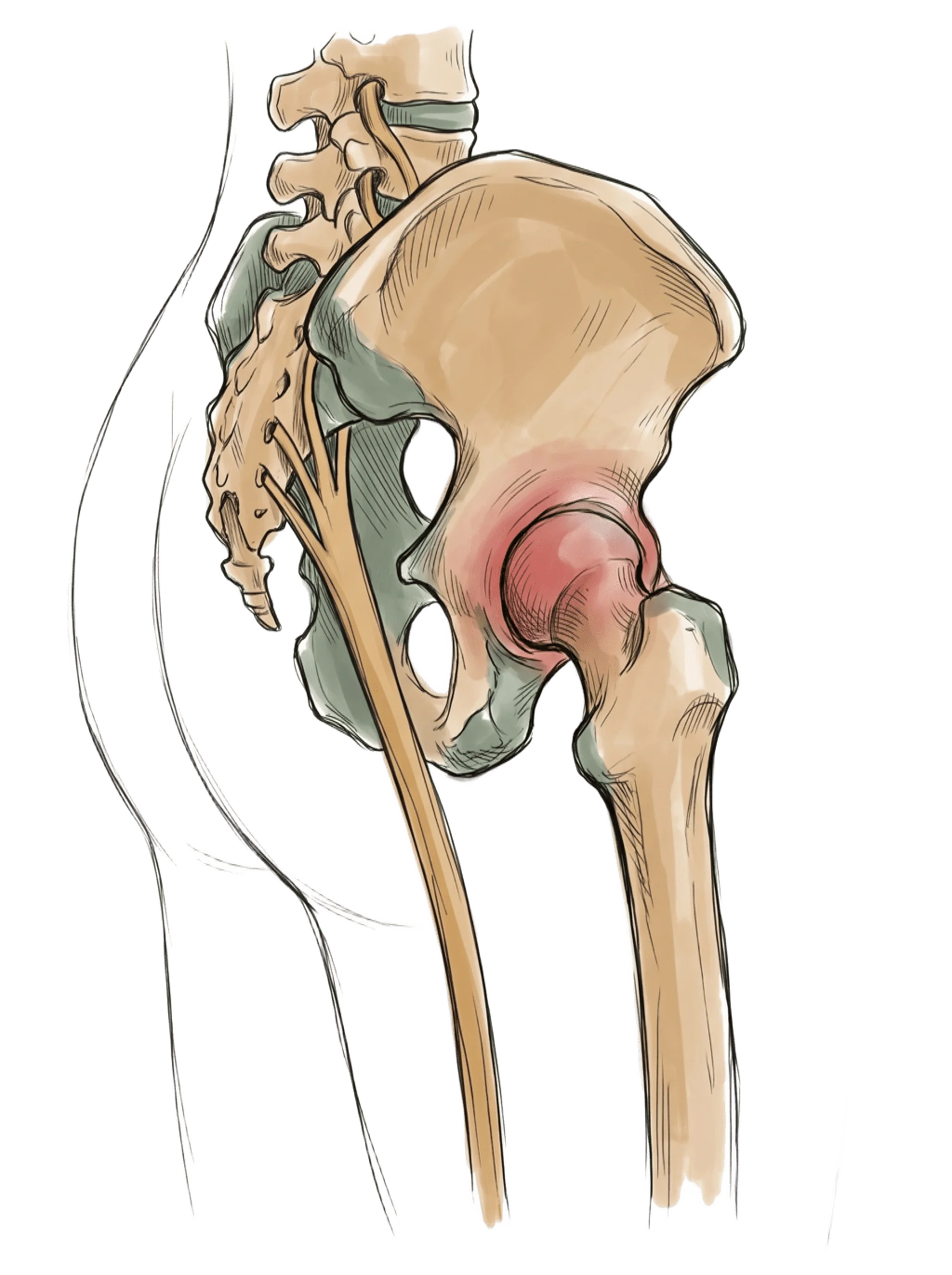
No single sign is conclusive, but the overall pattern usually separates them.
Points toward the hip:
- Pain centered in the groin rather than in the back
- Pain when you rotate the hip inward, cross your legs, or get out of a car
- Stiffness and limited range of motion in the joint itself
- A limp, or pain that eases as soon as you take weight off the leg
Points toward the spine:
- Pain that starts in the back or buttock and travels below the knee
- Pins and needles, numbness or weakness in the leg or foot
- Pain that changes clearly when you bend forward or lean back
- Symptoms that worsen when you cough or sneeze
When Groin Pain Needs Prompt Attention
Most groin pain is mechanical and not dangerous. These are the exceptions, and they warrant assessment rather than waiting:
- Groin pain after a fall, particularly if you cannot put weight through the leg
- Groin pain with fever, or with redness and heat over the joint
- A groin lump that is painful, firm, or that will not push back in
- New numbness in the groin or inner thighs, or any loss of bladder or bowel control
- Groin pain with unexplained weight loss, or a history of cancer
- Groin pain in someone on long-term steroids or drinking heavily, which raises the risk of osteonecrosis of the hip
Loss of bladder or bowel control alongside back pain, or numbness around the inner thighs and groin, is an emergency. Go to the emergency room, do not wait for an appointment.
How a Specialist Finds the Cause of Groin Pain
The history narrows the list before any imaging. Where the pain sits, what provokes it, and whether anything travels below the knee will usually separate hip from spine on their own.
Examination confirms it. Hip range of motion, inward rotation in particular, is tested directly, alongside nerve tests for the leg. Imaging then matches the suspicion: X-rays show the joint space and the bone, and MRI shows discs, nerve roots, cartilage and the labrum.
Where the picture is still unclear, a diagnostic injection settles it. Numbing the hip joint and seeing what happens to the pain is one of the most reliable ways to separate a hip source from a spinal one.
Treatment Options for Sciatica and Groin Pain
Most people improve without surgery, and treatment follows the structure causing the pain, which is why identifying it first matters.
- Physical therapy and a targeted home program, for nearly everyone
- Hip injection, where the hip joint is confirmed as the source
- Lumbar epidural steroid injection, when a nerve root in the back is irritated
- Facet joint injections, when arthritic facet joints are confirmed as the source
- Load management and activity change for muscle and tendon strains
For a fuller picture of how we assess and treat each of these, see our hip pain and sciatica pages, or work through our hip exercise program at home.
Frequently Asked Questions
Rarely. Sciatica travels down the back of the thigh and leg, while groin pain more often comes from the hip joint or an upper lumbar nerve root.
Yes, but usually not the one that causes sciatica. The L2, L3 and L4 roots supply the inner and front of the thigh, so irritation there can reach the groin.
Groin pain points to the hip more often than the spine, particularly when hip movement is stiff or you have developed a limp.
Piriformis syndrome mainly causes buttock pain that can travel down the leg. Groin pain is not a typical feature and points back toward the hip joint.
Hip and spine problems often coexist. Having both does not mean one is causing the other, which is why each needs assessing separately.
A pain specialist who assesses both the hip and the spine, so the source is identified before any treatment starts.
Conclusion
Sciatica is a common explanation for groin pain and usually the wrong one. The sciatic nerve runs down the back of the leg, so pain felt in the groin points elsewhere, most often to the hip joint itself.
If your groin pain has lasted more than a few weeks, is changing how you walk, or has not responded to treatment aimed at your back, have the hip and the spine assessed together. Our Midtown Manhattan clinic offers same-day appointments with a double board-certified pain specialist. Contact us to book.