The 10 Most Common Causes of Lower Back Pain
Most lower back pain traces back to one of ten causes. They fall into three broad groups: soft-tissue injuries, disc and nerve problems, and joint or structural changes.
1. Muscle Strain or Ligament Sprain
The most common cause by a wide margin. Lifting awkwardly, a sudden twist, or a heavy training session overstretches the muscles and ligaments supporting the lumbar spine.
- Pain is broad rather than pinpoint, and hard to localise with one finger
- Worse with movement, better with rest
- Stays in the back - it does not travel down the leg
- Most strains improve substantially within two to four weeks
2. Herniated or Bulging Disc
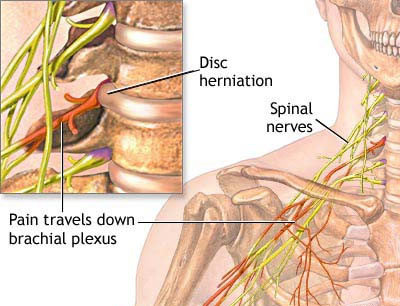
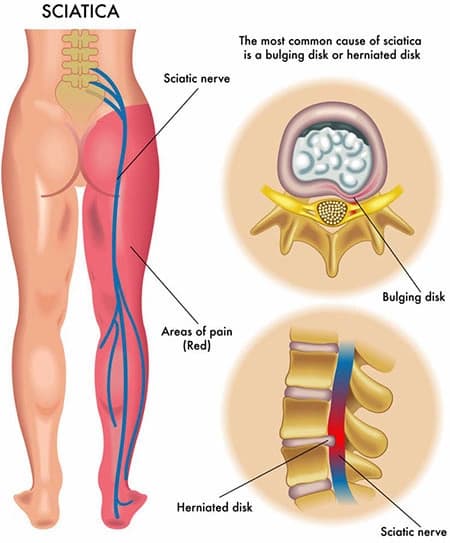
A herniated disc happens when the soft inner material of a spinal disc pushes through its outer wall and presses on a nearby nerve root. The defining feature is that the pain does not stay in the back - it travels into the buttock and down the leg, and coughing, sneezing or sitting typically makes it worse.
3. Sciatica (Lumbar Radiculopathy)
Sciatica is not a diagnosis in itself - it is the symptom of lumbar radiculopathy, a compressed sciatic nerve root, most often at L4, L5, or S1. It produces sharp, burning, or electric pain running from the lower back through the buttock and down the back of the leg, sometimes as far as the foot. It is almost always one-sided.
4. Facet Joint Syndrome
The facet joints are the small paired joints at the back of each spinal segment that guide movement. Arthritis or accumulated wear inflames them, producing pain that is worse leaning backwards or twisting, and better leaning forward. The pain tends to stay local rather than travelling down the leg. Learn more about facet joint syndrome.
5. Degenerative Disc Disease
Degenerative disc disease is age-related wear rather than a disease. Discs lose height and hydration over the years and absorb load less well. The result is a chronic ache that is worst in the morning and after long periods of sitting, with stiffness that eases once you get moving.
6. Spinal Stenosis
Stenosis is a narrowing of the spinal canal that compresses the nerves running through it. The signature symptom is leg heaviness, cramping or weakness that comes on when walking and is relieved by sitting or leaning forward. It is most common in adults over 60.
7. Sacroiliac (SI) Joint Dysfunction
The SI joints connect the base of the spine to the pelvis. When they become inflamed or move abnormally they refer pain into the lower back, buttock and groin in a pattern that closely mimics sciatica. This is one of the most frequently missed causes of lower back pain. Learn more about sacroiliac (SI) joint dysfunction.
8. Spondylolisthesis
Spondylolisthesis is the forward slippage of one vertebra over the one beneath it, narrowing the space where nerve roots exit. It produces lower back pain that worsens with extension and activity, often with hamstring tightness and, in more advanced cases, leg symptoms.
9. Muscle Spasm
An acute spasm is a sudden involuntary contraction severe enough to stop you straightening up. The muscle feels hard and rope-like and movement in one direction may be nearly impossible. Spasm is usually the body protecting an underlying strain or joint irritation rather than the root problem itself.
10. Vertebral Compression Fracture
In patients with osteoporosis a vertebral compression fracture can happen under relatively minor load - sometimes from a cough or a small fall. The pain is sudden, sharp and localised to one spot in the spine. It is more likely in older adults and anyone on long-term steroid therapy, and it needs prompt imaging.
Where Your Pain Is Tells You What Is Wrong
The location and behaviour of your pain is one of the most useful diagnostic clues available before any scan is ordered.
- Pain that stays in the lower back and changes with position - muscular strain, facet joint problem, or degenerative change
- Pain that travels below the knee - nerve root involvement, usually a herniated disc or lumbar radiculopathy
- Pain that stops at the buttock or upper thigh - more often SI joint or facet referral than a disc
- Worse leaning backwards - facet joints or spondylolisthesis
- Worse leaning forwards or sitting - points toward a disc
- Leg symptoms only when walking, relieved by sitting - the classic pattern of spinal stenosis
How Long Should Lower Back Pain Last?
Most acute lower back pain improves meaningfully within two to six weeks, and a simple strain often settles inside two weeks with relative rest and a gradual return to movement.
Pain that has not improved at all after four weeks, or that is getting progressively worse rather than better, is no longer behaving like a simple strain and warrants assessment. The same applies to pain that keeps returning every few weeks - recurrent episodes usually mean an underlying mechanical cause has not been addressed.
Red Flags: When Lower Back Pain Is an Emergency
Most lower back pain is not dangerous. A small number of presentations are, and they need same-day medical care rather than a scheduled appointment.
- Loss of bladder or bowel control, or numbness in the saddle area between the legs - this can indicate cauda equina syndrome and is a surgical emergency
- Progressive weakness in one or both legs, rather than pain alone
- Back pain with fever, unexplained weight loss, or a history of cancer
- Severe pain after significant trauma such as a fall from height or a road accident
If any of these apply, go to an emergency department rather than waiting for a clinic appointment.
What You Can Try First
If your pain is new, mild to moderate, and there are no red flags, these steps are reasonable to try for the first week or two.
- Keep moving - extended bed rest slows recovery, while gentle walking maintains circulation and prevents stiffness
- Use heat rather than ice after the first 48 hours, since heat relaxes guarding muscle
- Modify rather than stop - reduce loading and avoid the movements that reproduce sharp pain, but keep up daily activity
- Fix your sitting setup - chair height so hips sit slightly above knees, and a standing break every 30 to 45 minutes
- Start structured movement - core and hip strengthening reduces recurrence more reliably than any passive treatment
Our guided
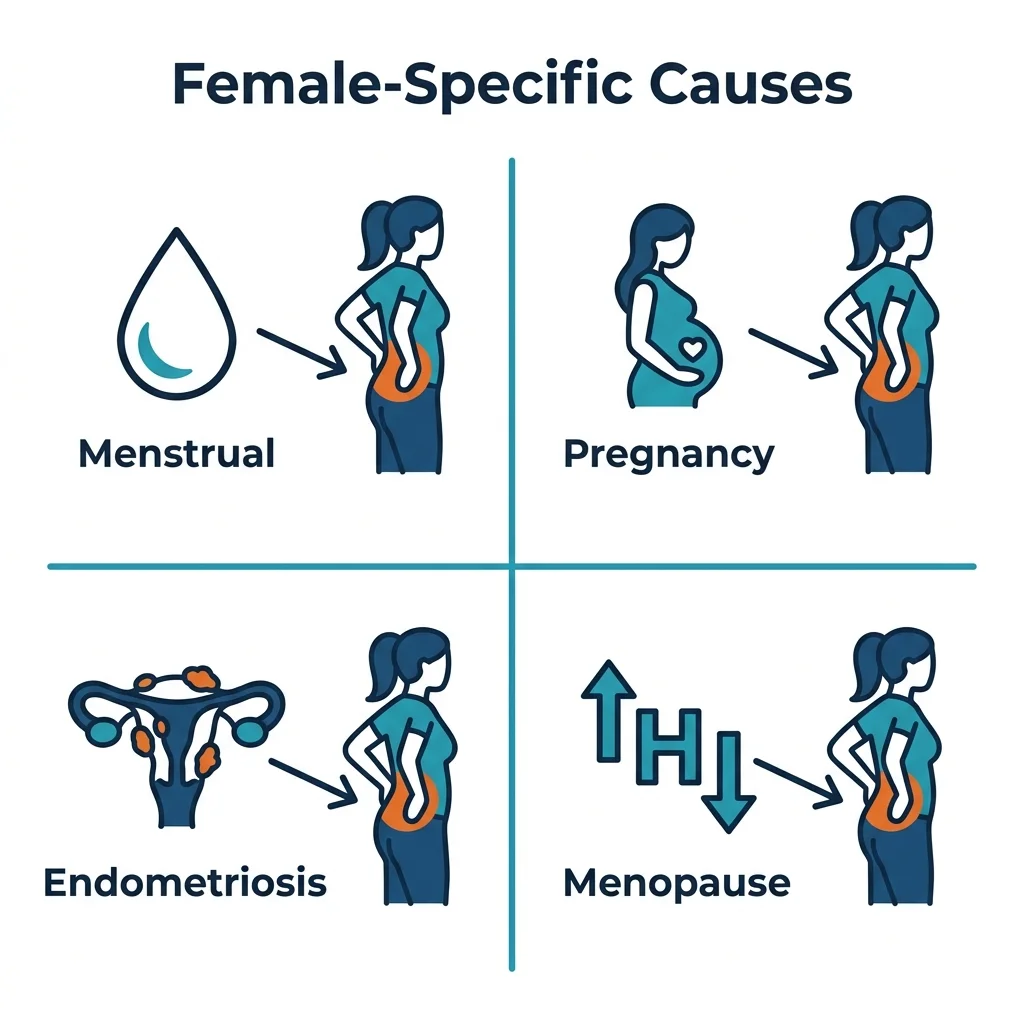
covers the specific movements that help most for each cause. If you are looking for causes specific to women, we cover those separately in our guide to
.
When to See a Lower Back Pain Specialist in NYC
Self-management has a clear ceiling. Book an assessment with a lower back pain specialist in NYC when any of the following apply.
- Pain has persisted beyond four weeks despite rest and activity modification
- Pain radiates into the leg, or there is numbness or tingling
- Episodes keep recurring every few weeks
- Pain wakes you at night or prevents comfortable sleep
- Pain is limiting work, training, or daily activities such as stairs
Seeing a specialist early matters more than most patients expect. Nerve compression treated in the first weeks responds considerably better than compression left for months, and identifying the mechanical driver early stops an acute episode becoming a chronic pattern.
How Sports Pain Management Treats Lower Back Pain
Assessment begins with history and physical examination - movement testing, neurological screening, and provocation tests that distinguish disc from facet from SI joint. Imaging is ordered when the examination indicates a structural cause, or when initial treatment has not produced the expected response.
A lumbar epidural steroid injection is the primary treatment for disc-related nerve compression, delivering anti-inflammatory medication under fluoroscopic guidance directly to the affected nerve root. Most patients notice meaningful improvement within three to seven days.
Facet joint injections and medial branch blocks are used where the facet joints are the confirmed source. Where a diagnostic block gives clear relief, radiofrequency ablation frequently provides twelve months or more of sustained relief.
Sacroiliac joint injections both confirm the diagnosis and treat it, which matters given how often SI joint pain is mistaken for sciatica.
Physical therapy accompanies the majority of interventional treatment. The pain relief window created by an injection is what makes rehabilitation possible, and the rehabilitation is what stops the pain returning.
Frequently Asked Questions
There is almost always a cause, but it is often cumulative rather than a single event - prolonged sitting, gradual disc degeneration, or repeated low-level strain that finally crosses a threshold.
Conclusion
Lower back pain has ten common causes and each behaves differently. Where the pain sits, whether it travels, and what makes it better or worse narrows the list considerably before any imaging is involved.
If your lower back has been hurting for more than a few weeks, if the pain is running into your leg, or if it keeps coming back, that is the point to stop guessing. An accurate diagnosis is what separates a temporary problem from a recurring one.