Key Takeaways
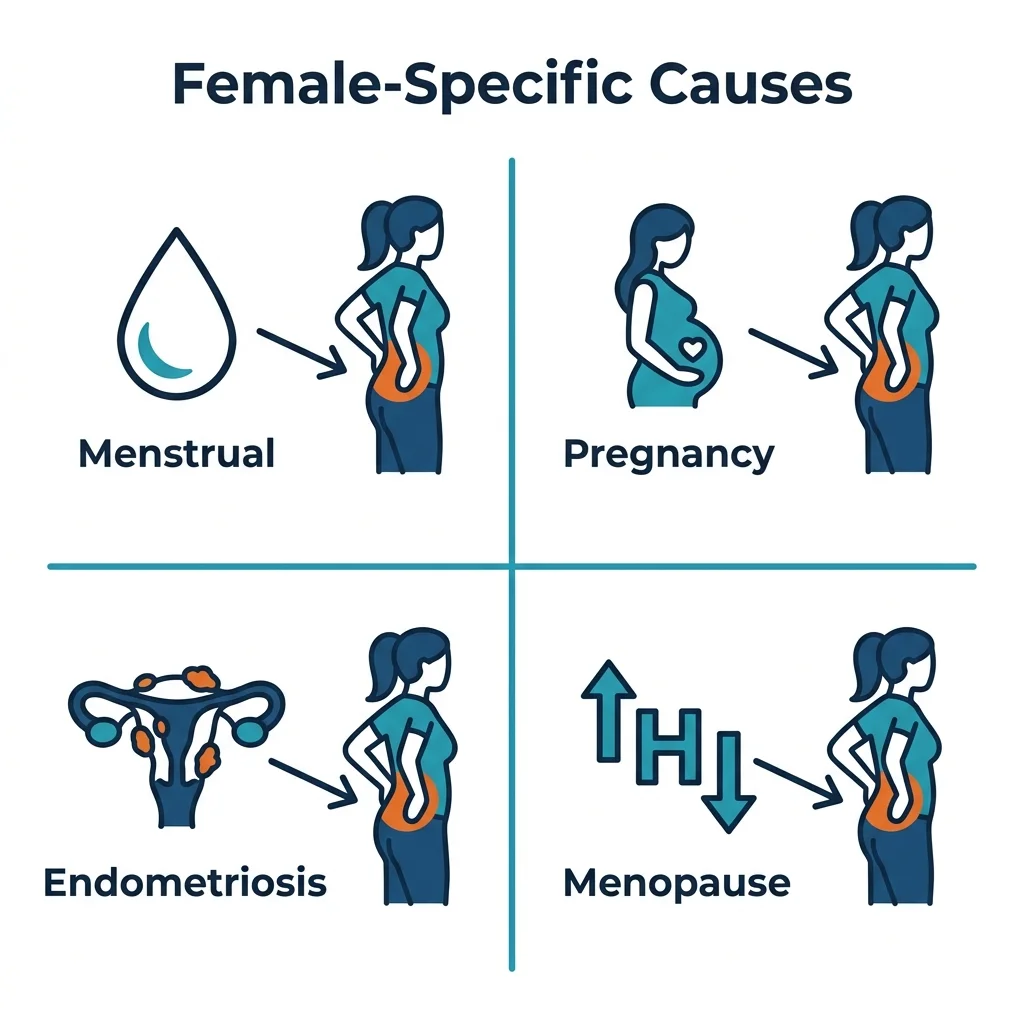
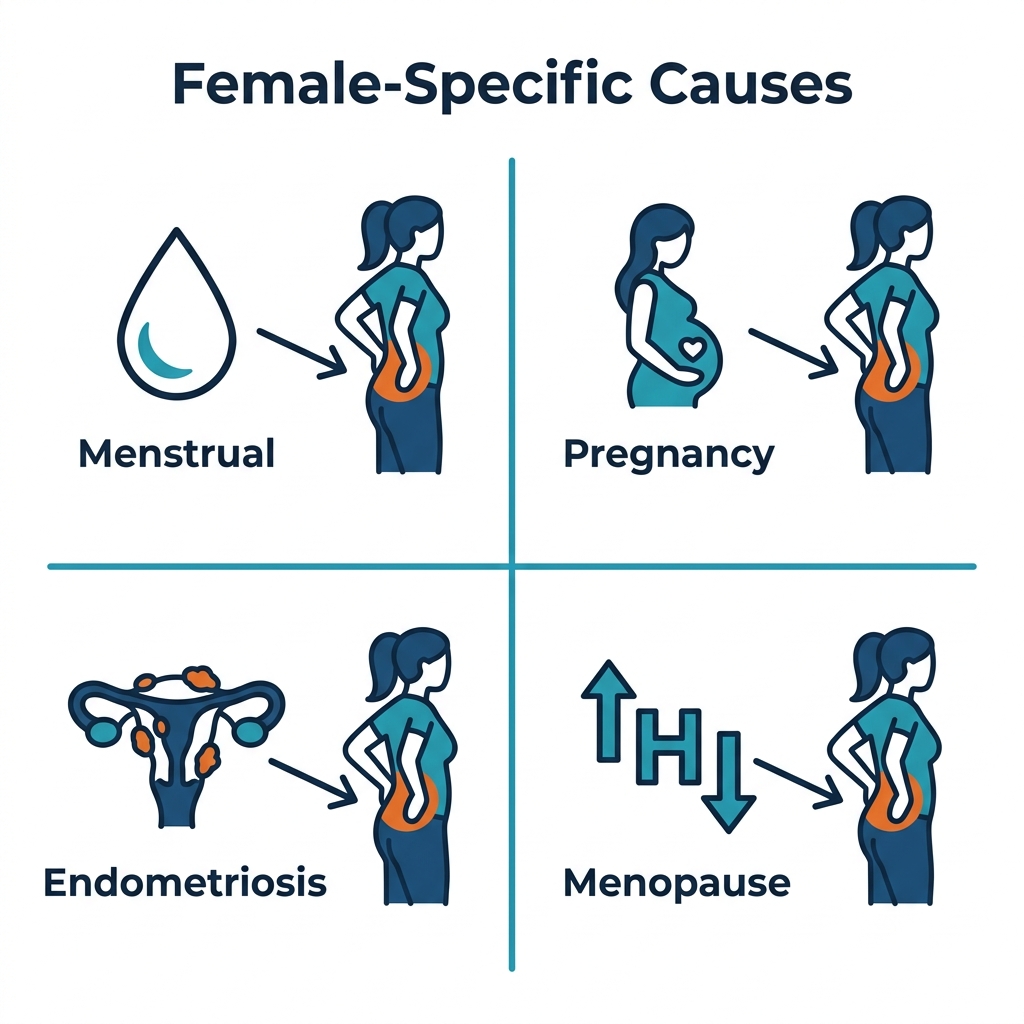
- Lower back pain in women has two main buckets: female-specific causes (menstrual, pregnancy, endometriosis, menopause) and general musculoskeletal causes (muscle strain, disc problems, sciatica, SI joint dysfunction).
- Period-related back pain is driven by prostaglandins that trigger uterine contractions and refer pain to the lower back.
- Endometriosis can cause cyclical lower back pain that flares before and during your period, and it is frequently missed.
- After menopause, falling estrogen accelerates bone loss, raising the risk of osteoporosis and painful spinal fractures.
- The sacroiliac joint and herniated discs are common mechanical causes, and women report SI joint pain more often than men.
- Red flags such as loss of bladder or bowel control, numbness in the saddle area, or new leg weakness are a medical emergency.
- Most causes can be diagnosed and treated without surgery, often with a same-day evaluation at a specialist clinic.
Why Lower Back Pain Affects Women Differently
Lower back pain in women is shaped by anatomy and hormones in ways that do not apply to men. The female pelvis is wider and tilted differently to allow for childbirth, which changes how load travels through the lower spine and the joints that connect the spine to the pelvis. Women also tend to carry less muscle mass around the core, so the lumbar spine gets less support during everyday movement.
Hormones add a second layer that men do not face. Estrogen, progesterone, and relaxin all shift across the menstrual cycle, through pregnancy, and into menopause, and each of those shifts can affect ligament laxity, inflammation, and bone density. That is why the same woman can have very different back pain at different points in her life, and why a thorough evaluation looks at both the spine and the timing of the pain.
This combination is why a generic "rest it and stretch" answer often misses the real driver. Pinpointing whether the pain is musculoskeletal, hormonal, or gynecological is what makes treatment actually work.
Female-Specific Causes of Lower Back Pain
Female-specific lower back pain is linked to the menstrual cycle, pregnancy, gynecological conditions, and menopause. These causes are the ones generic back pain articles tend to skip, and they are often the missing piece when a woman has been told her imaging looks "normal."
Period and Menstrual Back Pain
Period-related back pain is caused by prostaglandins, hormone-like chemicals that make the uterus contract to shed its lining. Those contractions and the inflammation around them refer pain into the lower back and can affect nearby muscles and ligaments. For many women the ache arrives a day or two before bleeding starts and eases as the period ends. When the pain is severe, disabling, or getting worse cycle over cycle, it is worth investigating rather than living with it.
Pregnancy and Postpartum Back Pain
Pregnancy is one of the most common causes of lower back pain in women, and it does not always resolve after delivery. The hormone relaxin loosens the pelvic ligaments to prepare for birth, the growing uterus shifts the center of gravity forward, and the added weight loads the lumbar spine and pelvis for months. Postpartum, the core and pelvic floor are often weak, which leaves the lower back doing work it is not built to do. Pain that lingers well beyond delivery is common and treatable, and it is not something a new mother has to accept as permanent.
Endometriosis and Gynecological Causes
Endometriosis can cause lower back pain that follows the menstrual cycle, often flaring before and during your period. According to Cleveland Clinic , endometriosis can produce abdominal or back pain during and between periods, and symptoms often feel worse just before and during menstruation because of inflammation. Other gynecological conditions, including uterine fibroids, ovarian cysts, and pelvic inflammatory disease, can also refer pain to the lower back. A cyclical pattern, pain with intercourse, or pain that tracks with your reproductive symptoms is a clue that the source may be gynecological rather than spinal, which is why coordination with a gynecologist sometimes matters.
Menopause and Osteoporosis
After menopause, lower back pain risk rises because falling estrogen speeds up bone loss. Cleveland Clinic notes that women can lose up to 20% of their bone density within five years of starting menopause, which raises the risk of osteoporosis and spinal compression fractures. These fractures can happen with minor movements like reaching or twisting, and they may present as sudden back pain or a gradual loss of height. For women over 50 with new or worsening back pain, bone health is part of the picture and should be assessed, not assumed away.
Common Musculoskeletal Causes That Affect Women Too
Most lower back pain in women is mechanical, meaning it comes from the muscles, discs, joints, and nerves of the spine rather than from a hormonal or gynecological source. The National Institute of Arthritis and Musculoskeletal and Skin Diseases lists sprains, strains, and disc problems among the leading mechanical causes, and notes that risk climbs with lower fitness, added weight, and age, particularly after 45.
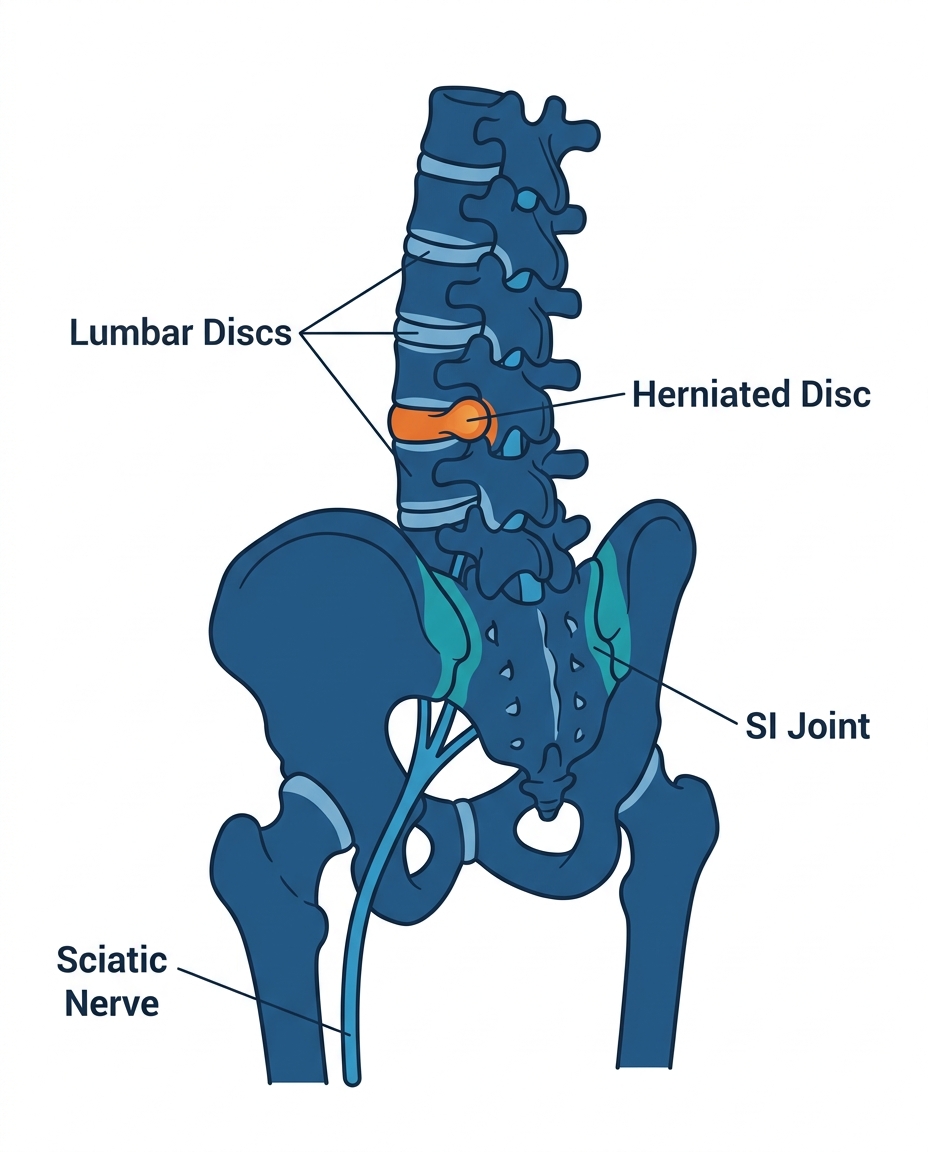
Muscle and ligament strain is the single most common cause. Lifting a heavy bag the wrong way, a new workout, or hours hunched at a Midtown desk can overload the lower back muscles, producing pain that worsens with movement and eases with rest. Most strains settle within a few weeks.
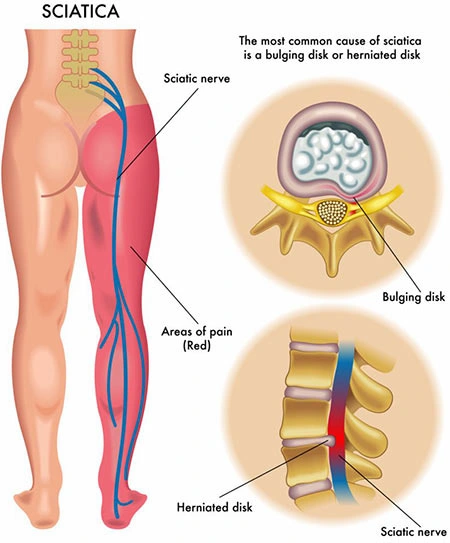
A herniated disc happens when the soft center of a spinal disc pushes through its outer wall and presses on a nearby nerve. In the lower back this often produces sciatica , pain that shoots from the lower back through the buttock and down the leg, sometimes with numbness or tingling. Many disc-related cases improve without surgery, and when they do not, a targeted lumbar epidural steroid injection can calm the inflamed nerve. Doctors call this nerve-root pain lumbar radiculopathy. A disc pressing on a nerve is also a common cause of a pinched nerve in the back.
Sacroiliac joint dysfunction is a frequent and underdiagnosed cause of one-sided lower back and buttock pain in women, partly because pregnancy and ligament laxity load this joint heavily. The SI joint is where the base of the spine meets the pelvis, and when it moves too much or too little it produces pain that can radiate into the hip or groin. When the SI joint or hip is the driver, a precise hip injection or SI joint injection can both confirm the diagnosis and relieve the pain.
Degenerative disc disease, spinal osteoarthritis, and piriformis syndrome round out the common mechanical causes. Degeneration and arthritis build up gradually with age and tend to cause stiffness and aching that is worse in the morning or after sitting. Piriformis syndrome occurs when a deep buttock muscle irritates the sciatic nerve, mimicking disc-related sciatica. Ongoing chronic lower back pain from any of these is worth a specialist evaluation rather than another round of guesswork.
How a Specialist Pinpoints the Cause
A specialist identifies the cause of lower back pain by combining your history, a physical exam, and targeted imaging or diagnostic injections, not by relying on a scan alone. The timing of your pain matters as much as the location. Pain that tracks with your menstrual cycle points toward a hormonal or gynecological source, while pain that shoots down one leg points toward a nerve being compressed by a disc.
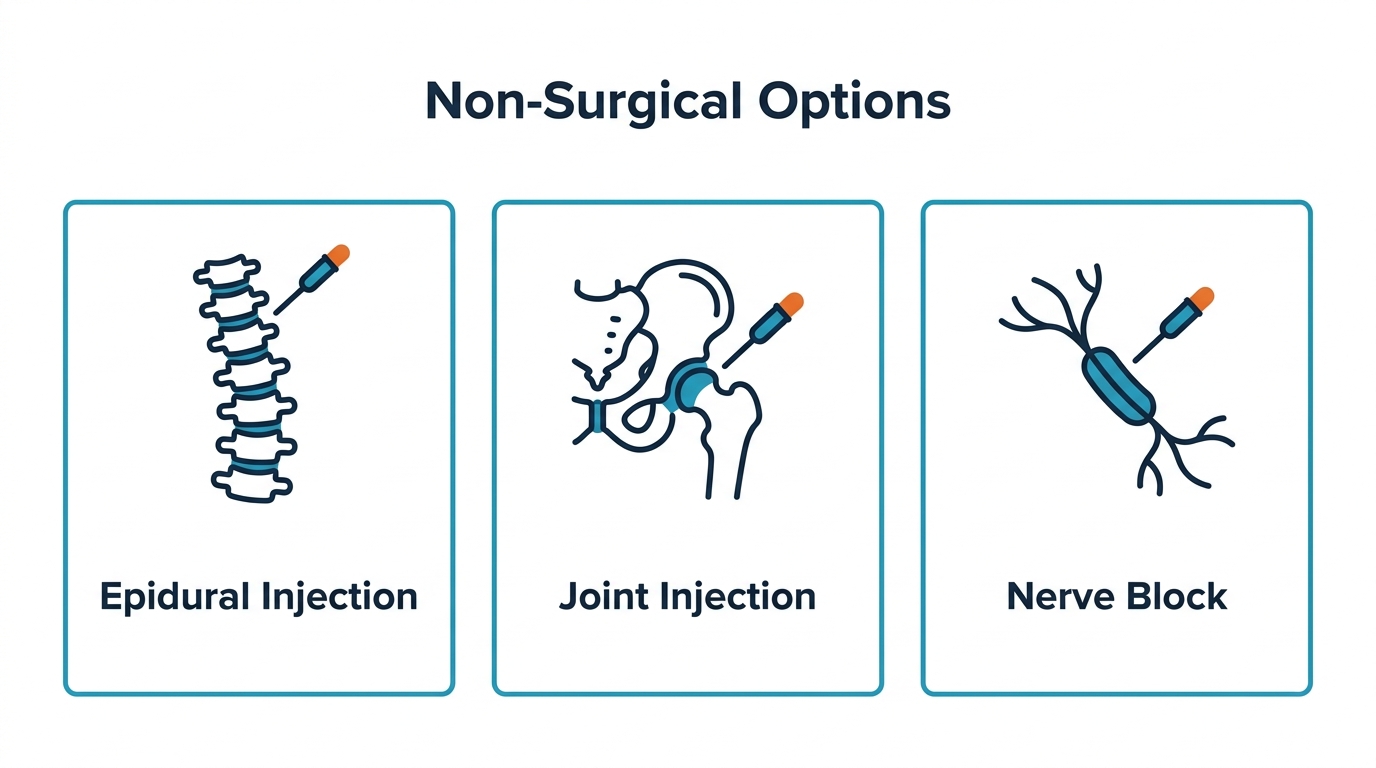
This is where an interventional pain approach helps. A diagnostic injection placed precisely at a suspected source, such as the SI joint or a specific nerve root, can confirm where the pain is coming from and deliver relief at the same time. The goal is a specific answer and a non-surgical plan, not just a label like "lower back pain" with no known driver.
When to See a Doctor: Red Flags You Should Not Ignore
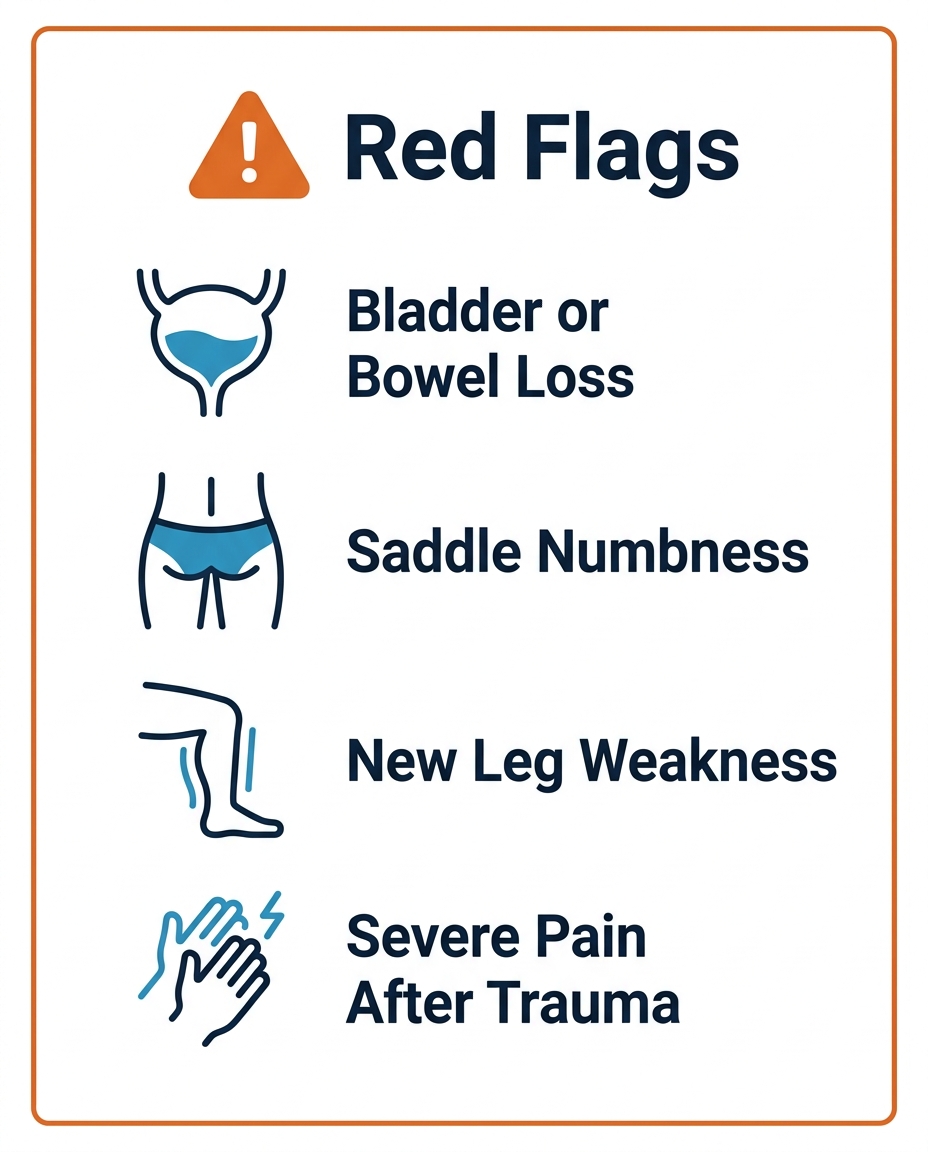
Most lower back pain in women is not dangerous, but a few warning signs need urgent care. Go to an emergency room right away if your back pain comes with any of the following, which can signal cauda equina syndrome, a surgical emergency described by Cleveland Clinic :
- Loss of bladder or bowel control, or new difficulty urinating
- Numbness in the saddle area (groin, inner thighs, or buttocks)
- New or worsening weakness in one or both legs
- Severe back pain after a significant fall or accident
Other signs call for a prompt medical evaluation rather than the ER. These include back pain with a fever, unexplained weight loss, pain that is steadily getting worse over weeks, or pain that wakes you from sleep. For New Yorkers, the practical rule is simple: emergencies go to the ER, and pain that has lasted more than a couple of weeks, keeps returning, or limits your daily life is worth a same-day evaluation with a specialist before it becomes chronic.
Frequently Asked Questions
Lower back pain in women usually comes from either a female-specific cause tied to hormones and reproductive anatomy, such as your period, pregnancy, endometriosis, or menopause, or a general musculoskeletal cause such as muscle strain, a herniated disc, or sacroiliac joint dysfunction. The timing and location of the pain are the biggest clues to which one is driving it.
Find the Cause and Get Relief Without Surgery
If your lower back pain has lasted more than a couple of weeks, keeps returning, or you are noticing any of the warning signs above, you do not have to wait it out or jump straight to surgery. Dr. Febin Melepura is a double board-certified interventional pain physician who offers same-day evaluations and minimally invasive, non-surgical treatment at his Midtown Manhattan clinic. You can schedule a visit to find out exactly what is causing your pain and what your options are.