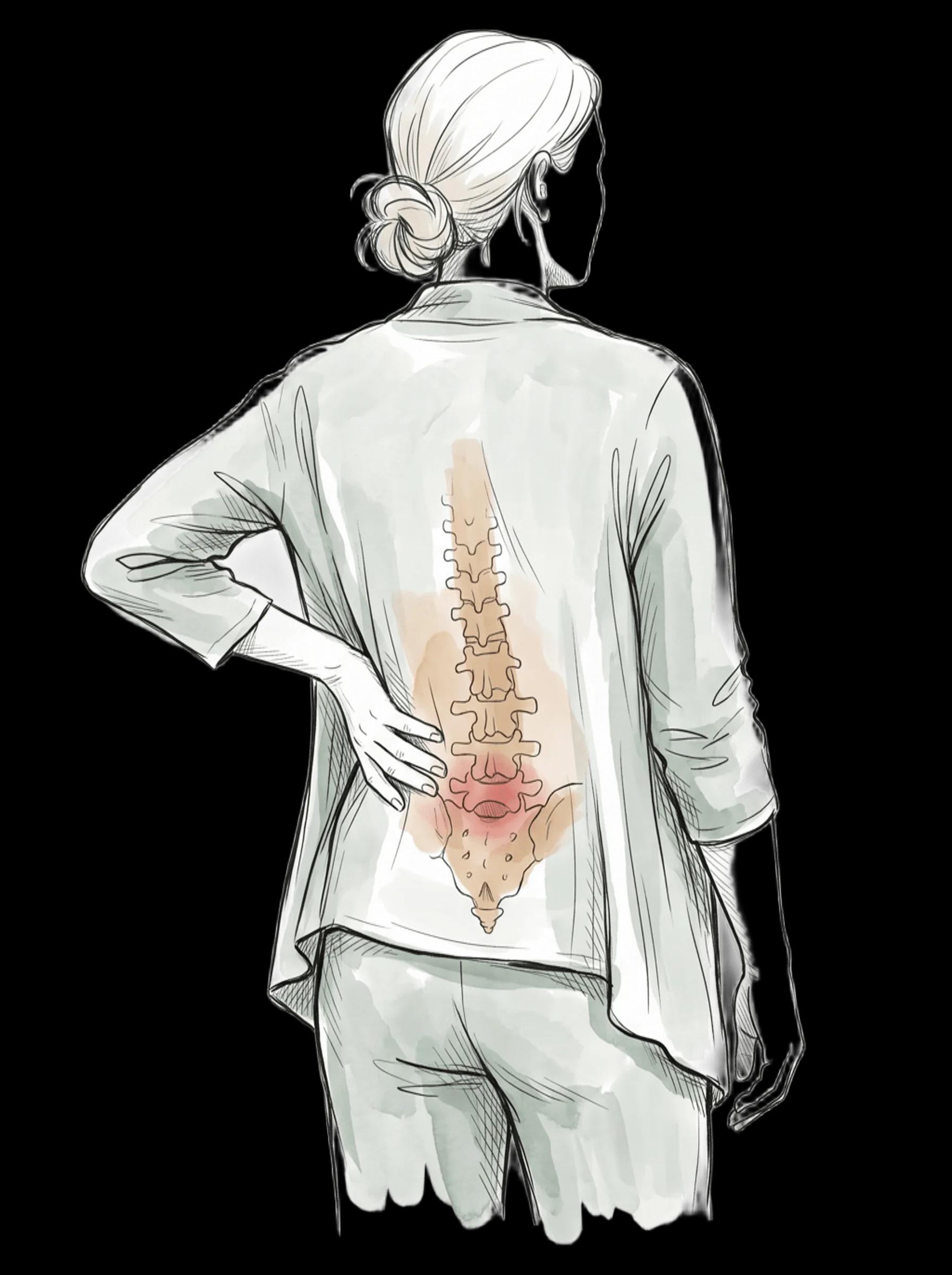
What Changes in the Spine After 50
Three things happen at once, and they compound each other.
Bone density falls faster after menopause. Estrogen helps maintain bone, so when levels drop at menopause the rate of bone loss increases. Weaker vertebrae fracture more easily, sometimes without a fall.
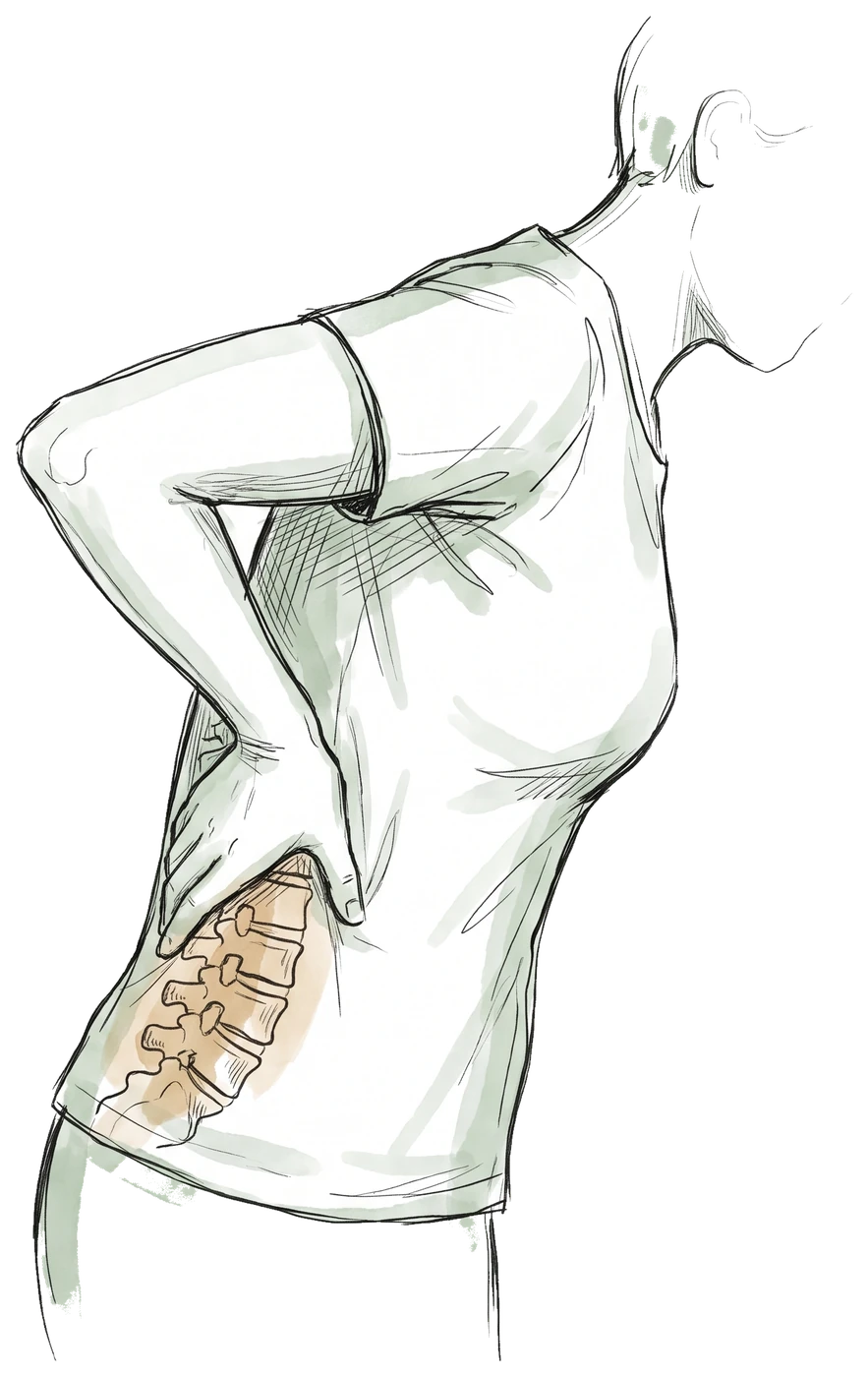
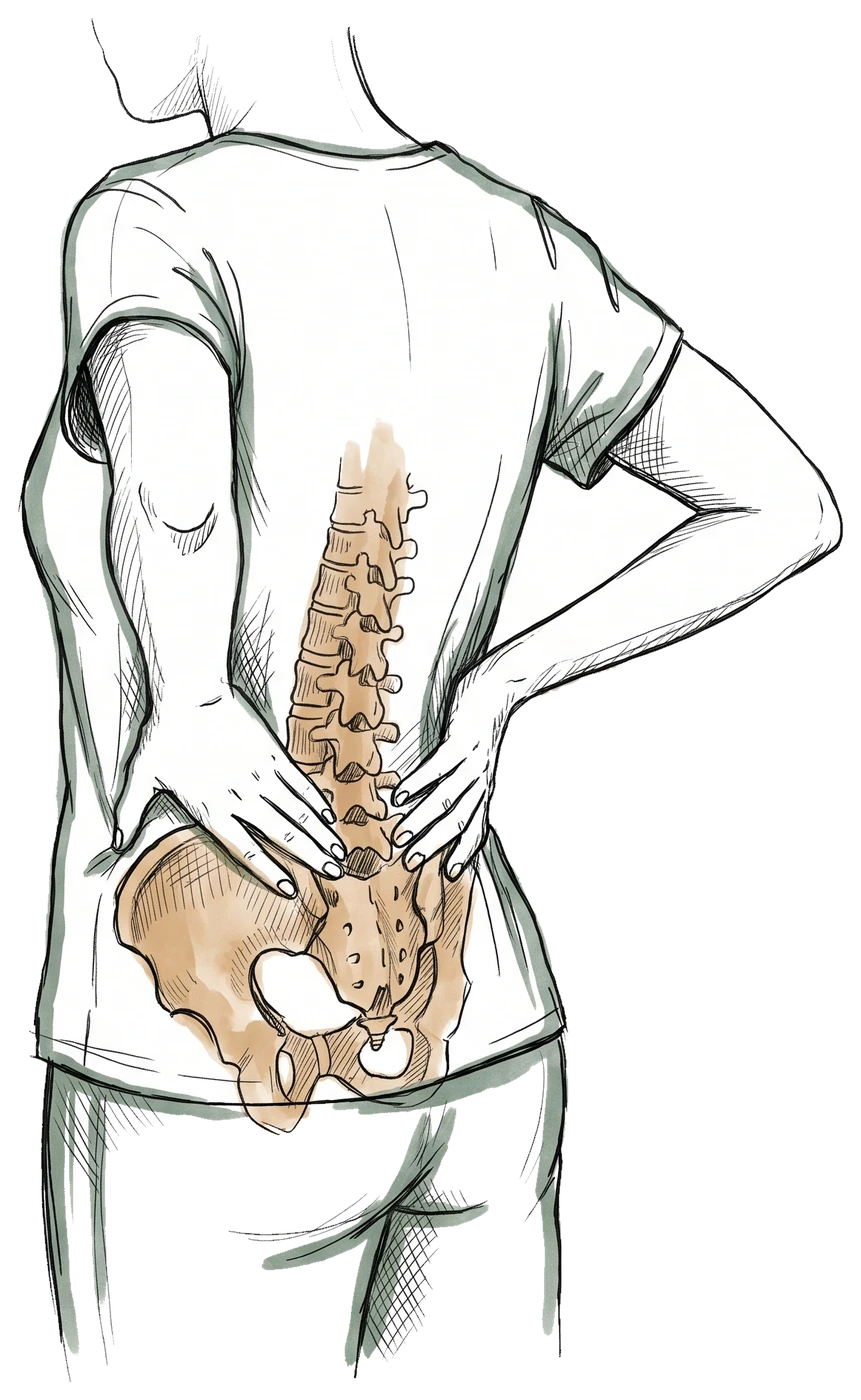
Discs lose water. The cushions between the vertebrae flatten and stiffen with age, which narrows the space the nerves pass through and shifts load onto the small joints at the back of the spine.
Supporting muscle thins. Muscle mass declines with age unless it is actively maintained, and the deep muscles that stabilize the lower back are among the first to weaken.
None of this means pain is inevitable or untreatable. It means the cause is more likely to be structural than a simple strain, and worth identifying properly rather than waiting out.
The Most Common Causes After 50
1. Facet Joint Arthritis: The facet joints are the small paired joints at the back of each spinal segment. They wear like any other joint, and when the cartilage thins the joint becomes inflamed and stiff. Facet joint syndrome typically causes pain that is worse when you stand or lean backwards, better when you sit or bend forwards, and stiffest first thing in the morning.
2. Degenerative Disc Disease: Despite the name this is not a disease but a description of age-related disc change. Degenerative disc disease causes a deep, aching pain that is often worse with sitting and better with walking. It can flare for weeks and then settle for months.
3. Spinal Stenosis: As discs flatten and joints thicken, the canal carrying the spinal nerves narrows. Spinal stenosis has a recognizable pattern: pain, heaviness or numbness in the legs that comes on after walking a certain distance and eases when you sit down or lean forward over a shopping cart.
4. Vertebral Compression Fracture: This is the cause most specific to this age group, and the one most often missed. When bone density is low, a vertebra can crack under ordinary load: lifting a bag, a minor stumble, sometimes nothing identifiable. A compression fracture causes sudden, sharp, localized pain that is much worse when you move from lying to standing. Sudden severe back pain after menopause should always be assessed.
5. Spondylolisthesis: One vertebra slips slightly forward over the one below it. Spondylolisthesis in this age group is usually degenerative, caused by the facet joints wearing until they no longer hold the segment in place. It often produces both back pain and leg symptoms.
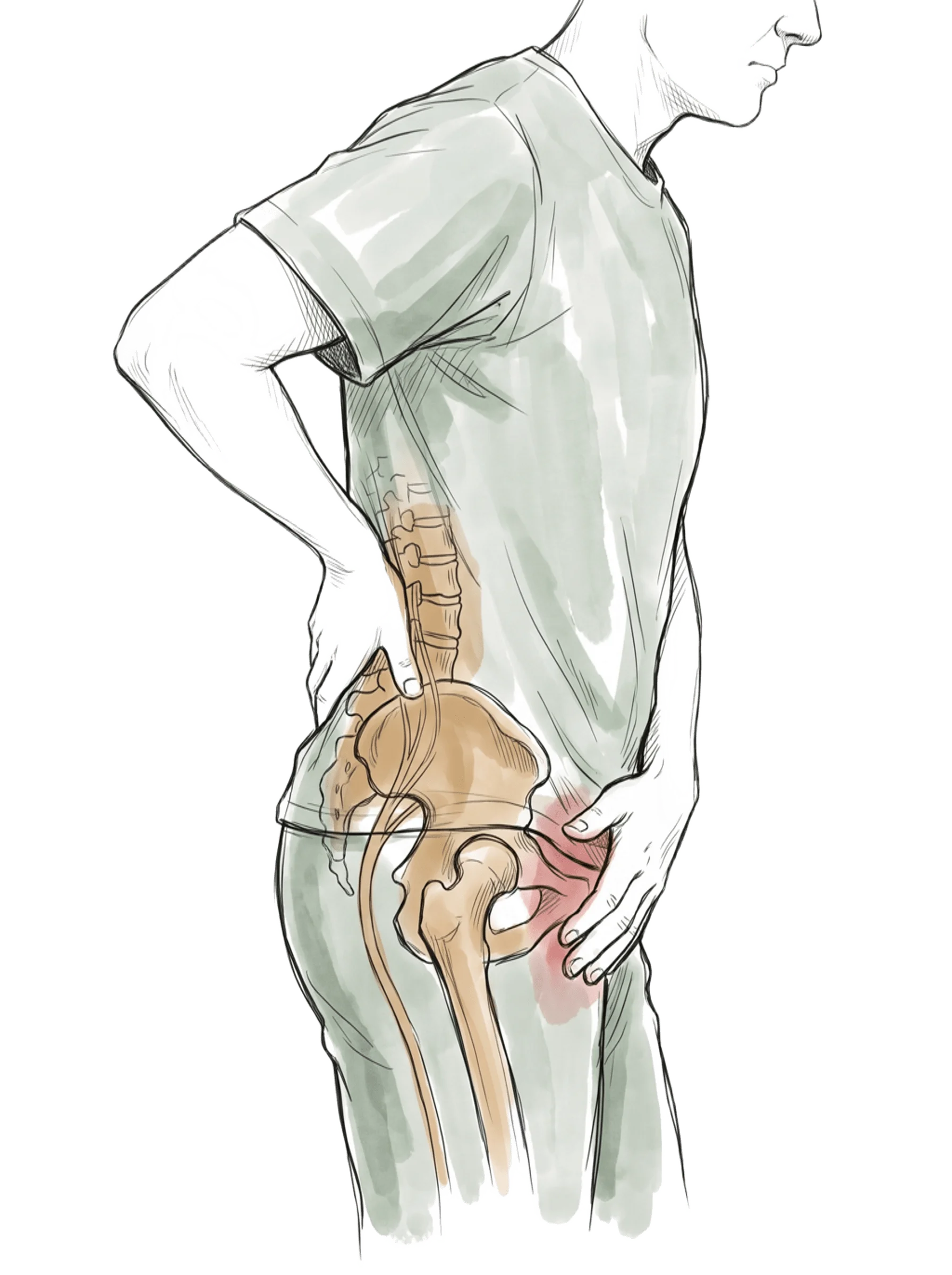
6. Sacroiliac Joint Dysfunction: The sacroiliac joints connect the spine to the pelvis. SI joint dysfunction causes pain low down and to one side, often described as being in the buttock rather than the back, and is frequently mistaken for sciatica.
7. Muscle Strain and Spasm: Strains still happen, and they hurt no less. The difference after 50 is that a muscle spasm in the back is more likely to be protecting an underlying joint or disc problem, so pain that keeps returning to the same spot deserves a proper look.
Where Menopause Fits In
Menopause is linked to more back pain. Falling estrogen speeds bone loss, which raises the risk of a compression fracture, and is associated with faster disc wear. New back pain around or after menopause is worth investigating rather than putting it down to age, and our guide to menopause and osteoporosis in women covers the hormonal side.
When to Get Checked Quickly
Most lower back pain is not dangerous. These signs are the exceptions, and they warrant prompt medical assessment rather than waiting:
- Sudden severe back pain after a minor fall, a lift, or no clear injury at all
- Pain that is clearly worse when you move from lying down to standing
- Numbness, weakness or pins and needles in one or both legs that is getting worse
- Any loss of bladder or bowel control, new difficulty passing urine, or numbness around the inner thighs or groin
- Back pain with fever, unexplained weight loss, or a history of cancer
- New back pain when you already have osteoporosis, or have been on steroid tablets long term
- Night pain that wakes you and does not settle in any position
Loss of bladder or bowel control, or sudden difficulty passing urine, with back pain is an emergency. Go to the emergency room, do not wait for an appointment.
What Helps at Home
For ordinary mechanical back pain, the evidence favors staying active over resting.
- Keep moving. Walking is usually better tolerated than sitting, and bed rest does not help; staying active works slightly better.
- Work on strength, not just stretching. The deep muscles that support the lower back respond to loading. Our home exercise program for low back pain sets this out in four stages, and the lower and upper back exercise library shows each movement individually.
- Weight-bearing exercise supports bone. Walking, stair climbing and resistance work all load the skeleton in ways swimming and cycling do not.
- Heat for stiffness, ice for a fresh flare. Neither fixes the cause, but both make movement easier, which does.
- Give it two weeks. Pain that has not started improving in that time, or that is worsening, is worth having assessed.
How a Specialist Works Out the Cause
The pattern of your pain narrows the list before any imaging. Pain that eases when you bend forward points toward stenosis; pain that eases when you lean back points toward a disc; pain on one side low down points toward the SI joint.
From there, examination and targeted imaging confirm it. X-rays show alignment and bone; MRI shows discs, nerves and soft tissue. A diagnostic injection can also confirm which structure is generating the pain, by numbing one joint at a time and seeing what changes.
Treatment Options
Most people improve without surgery. Treatment is matched to the structure causing the pain, which is why identifying it first matters.
- Physical therapy and a structured home program, for almost everyone
- Facet joint injections, when arthritic facet joints are confirmed as the source
- Lumbar epidural steroid injection, when a disc or stenosis is irritating a nerve root
- Radiofrequency ablation, for confirmed facet joint pain, once diagnostic medial branch blocks identify the facet joints as the source
- Bone health treatment, where low density or a fracture is found
For a full picture of how we assess and treat the lower back, see our lower back pain and back pain pages.
Frequently Asked Questions
Morning stiffness that eases within half an hour of moving usually points to facet joint arthritis rather than a disc. Stiffness that lasts longer than that is worth having checked.
Usually yes. Walking loads the spine in a way that helps, and it supports bone density at the same time.
Not routinely. An MRI is useful when there are nerve symptoms, red flags, or pain that has not improved with several weeks of treatment.
Yes. After menopause a vertebra can crack under ordinary load. Sudden sharp pain that is much worse standing up should be assessed.
Conclusion
Lower back pain after 50 is common, but it is not something to simply accept. The causes at this age are identifiable and most are treatable without surgery. The key is working out which structure is responsible rather than treating "back pain" in general.
If your pain has lasted more than a few weeks, started suddenly, or is changing, have it assessed. Our Midtown Manhattan clinic offers same-day appointments with a double board-certified pain specialist. Contact us to arrange a visit.