

Stenosis of the Neck
The spinal column — containing the spinal cord, the vertebrae, accompanying discs and the long branches of nerves — all fit into a compact, tight space. Any trauma or disease affecting this column can cause symptoms ranging from mildly irritating to excruciating.
Spinal stenosis of the neck involves the narrowing of the spaces within the vertebrae of your neck, putting pressure on the nerves that travel through and exit the spinal column. Stenosis can occur in your lower back as well, but the tighter space of the neck makes it particularly susceptible. Most people who experience neck stenosis are over the age of 50, though there are rare cases of a congenital condition.
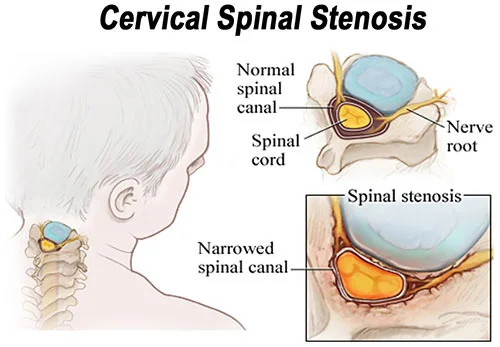
Stenosis of the Neck NYC — SPIN Sports Pain Specialists
Ready to treat your neck stenosis?
Same-day neck stenosis appointments available.
Neck Stenosis Basics
Neck stenosis can result from a variety of causes, such as:
- The wear and tear of aging
- Overgrowth of bone to form bone spurs
- Herniated discs
- Thickened ligaments, the tough cords holding the bones of the spine together, that bulge into the spinal column
- Age-related destruction of cartilage
- Tumors
Additionally, spinal injuries – such as car accidents, falls, sports injuries or other traumas – cause dislocations or fractures of one or more vertebrae. The displaced bone or swollen tissue puts pressure on your spinal cord and nerves.
Symptoms of Neck Stenosis
Some individuals have neck stenosis and are asymptomatic, meaning they experience absolutely no symptoms. Others have mild to moderate symptoms, but some can be debilitating. These symptoms can include:

Neck pain

Tingling or numbness in your hands, arms, feet or legs

Weakness in hands, arms, feet or legs

Problems with walking or balance

Severe cases may result in bowel or bladder dysfunction
Complications of Untreated Spinal Stenosis of the Neck
While minor herniated discs may resolve on their own, most of the other reasons spinal stenosis of the neck forms require some kind of medical treatment. If left untreated, the narrowing compression can lead to permanent disability, numbness, weakness, balance problems, incontinence, and even paralysis.
Your NYC sports and pain specialist diagnoses neck stenosis by combining information from one or more of the following procedures:
- A complete medical history
- An explanation of the extent of your symptoms
- Onset description2
- Physical exam
- X-rays of the cervical vertebra
- Magnetic resonance imaging or MRI
- Computed tomography or CT scan
- Blood work to rule out multiple sclerosis or vitamin B12 deficiency
Conservative Neck Stenosis Treatment
If you're asymptomatic or your symptoms are mild, exercise and self-care — including modified activity and rest — may be sufficient. If these don't help, your doctor may suggest:
Aggressive Neck Stenosis Treatment
If conservative methods aren't giving you the relief you need from the pain, tingling, and discomfort of spinal stenosis, your NYC pain specialist has surgical options available:
This procedure removes the back part (lamina) or the thickened ligament of the affected vertebra. This eases the pressure on your nerves and may be done in conjunction with spinal fusion for spine strength.
This procedure also removes part of the lamina, but usually through a hole just large enough for pressure release.
A hinge is created on the lamina with metal hardware bridging the gap.
The goal of the surgery is to relieve pressure on your spinal cord or nerve roots by creating more space within the spinal canal. As with any surgery, risks are present. Possible risks include the pain continuing or worsening, a tear in the membrane that covers your spinal cord, blood clots in a leg vein or neurological deterioration.
Ready to find relief from neck stenosis?
Dr. Melepura's Midtown Manhattan clinic offers same-day appointments for evaluation and treatment.
Aftercare and Beyond
After neck stenosis surgery, recovery time takes four to six weeks. As you heal, you may need to incorporate a combination of the following on a regular basis:
The goal of your Manhattan pain specialist is to search for the neck stenosis treatment that gives you the most relief of your symptoms. He finds treatments that work to ensure your condition doesn't worsen. Healthy and honest communication with your doctor about your lifestyle, history, and symptoms makes you an active partner in your neck and spine health.
Real Stories from our Patients







Dr. Febin Melepura, MD
Double Board-Certified Pain Specialist
Meet Dr. Febin Melepura — Your Neck Stenosis Specialist in NYC
Dr. Febin Melepura, MD is a double board-certified interventional pain management specialist and the founder of the Sports Pain Institute of New York. He completed his residency and fellowship training at New York Presbyterian Hospital / Columbia University Medical Center, one of the nation's leading academic medical centers.
He holds dual board certifications from the American Board of Anesthesiology and the American Board of Pain Medicine, and has treated more than 7,500 patients and performed over 5,250 procedures throughout his career. He has been named a Top Pain Management Doctor in New York and one of America's Top Doctors™ by Castle Connolly.
Dr. Melepura's approach to stenosis of the neck is rooted in precision: identify the exact source, treat it with a targeted injection, and get you back to your daily life as quickly as possible.
What Our Neck Stenosis Patients Say

"Able to make an appointment to see Dr. Melepura on short notice… attentive to my concerns… Jazmin was also very kind and helpful."

"Excellent hospitality, listener and explainer… highly recommend the doctor and the place."
"Dr. Melepura is the best! He worked with me to find the optimal solution to my shoulder pain while I was preparing for a fight!"
"Lovely, bright and modern… doctor and staff were kind… felt my concerns were heard."
"Helpful and friendly staff who gladly follows up with you if and when needed. Dr Melepura was very helpful and professional as well as provided me with excellent information and feedback."
"Dr Febin is fantastic! Highly recommend him and his practice the Spin clinic. The doctor is a good listener, kind, attentive and gave me great advice. "
"Dr.Melepura was very efficient and interpersonal, felt like he was understanding the problems I was having and explained the processes to take to rehabilitate. I would recommend."
"I felt listened to and truly understood by Dr. Melepura. Started PT the very next day. They were very friendly and I didn't feel rushed at all. Already recommended them to my friends who have or continue to play through pain."