You rack the bar after a hard leg session and both knees are already complaining. Knee pain after squats is one of the most common complaints at sports pain clinics in New York City - and one of the most mismanaged. Some causes resolve on their own with smarter training. Others signal structural damage that gets significantly worse when ignored.
This guide covers the six most common causes, a pain-location guide to narrow your diagnosis, a clear line between normal soreness and warning signs, and exactly when conservative care stops being enough.
What Causes Knee Pain After Squats? (6 Most Common Causes)
Squat-related knee pain almost always comes from one of six sources. The correct treatment depends entirely on which one - so location, character, and timing of pain all matter.
1. Patellofemoral Pain Syndrome (Runner's Knee)
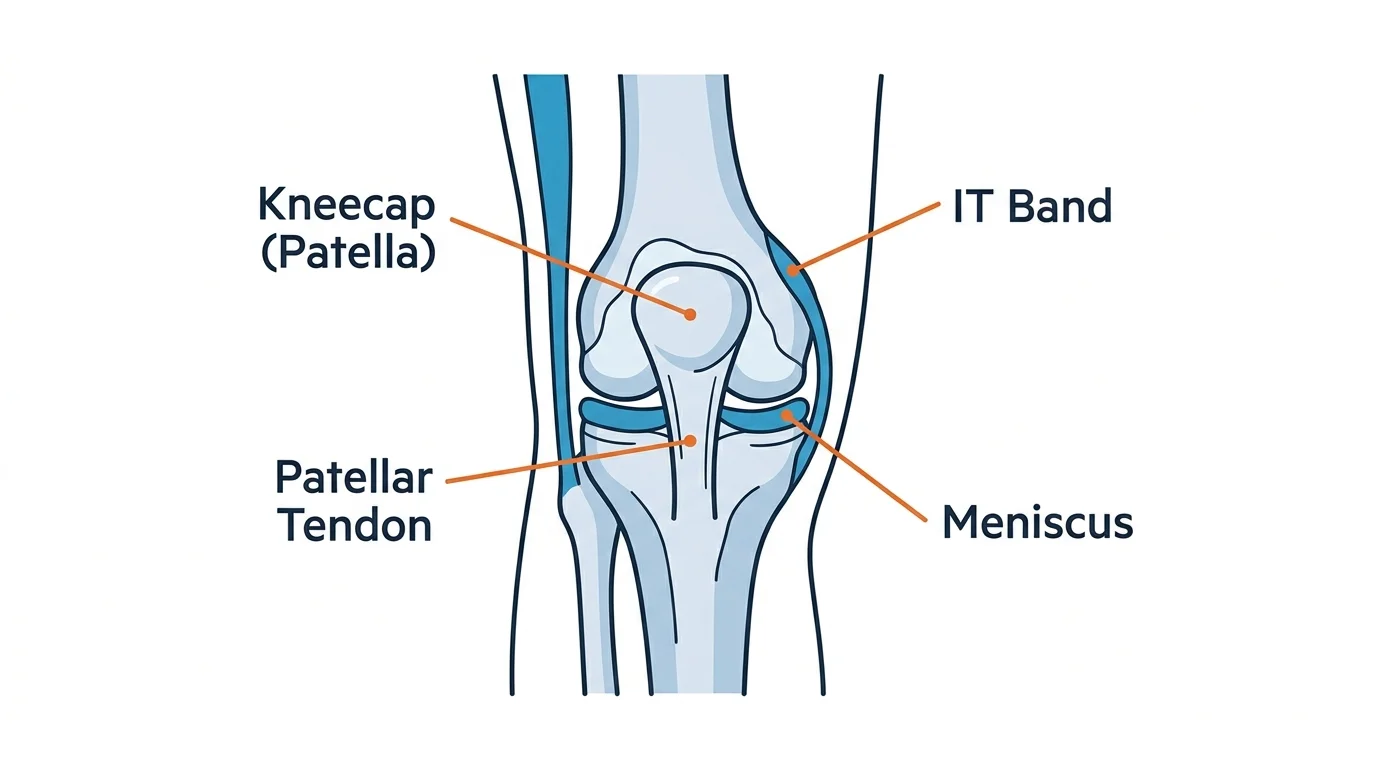
Patellofemoral pain syndrome (PFPS) is the most common cause of knee pain in active adults. It occurs when the kneecap (patella) tracks incorrectly across the femur during movement.
Why squats trigger it: During a deep squat, the patella absorbs up to 8× your bodyweight in compressive force. When tracking is off - due to weak VMO, tight lateral retinaculum, or foot pronation - that force is distributed unevenly.
Symptoms:
- Dull, aching pain around or behind the kneecap
- Worse after prolonged sitting, stairs, or repeated squats
- Pain that builds gradually during a set
- No swelling (distinguishes it from joint-line injuries)
Common in: gym athletes doing high-volume leg work, runners who also lift, and athletes returning from a training break. See our full breakdown of 11 potential causes of knee pain after working out.
2. Patellar Tendinitis (Jumper's Knee)
Patellar tendinitis is inflammation or micro-tearing of the patellar tendon - the structure that connects the kneecap to the shin bone. It develops when training load exceeds the tendon's capacity to recover.
Symptoms:
- Sharp or aching pain directly below the kneecap
- Pain most intense during the lowering (eccentric) phase of a squat
- Stiff and painful first thing in the morning
- Tenderness to touch at the patellar tendon insertion
Risk factors: rapid increase in squat weight or volume, inadequate warm-up, training on hard surfaces.
3. Chondromalacia Patella
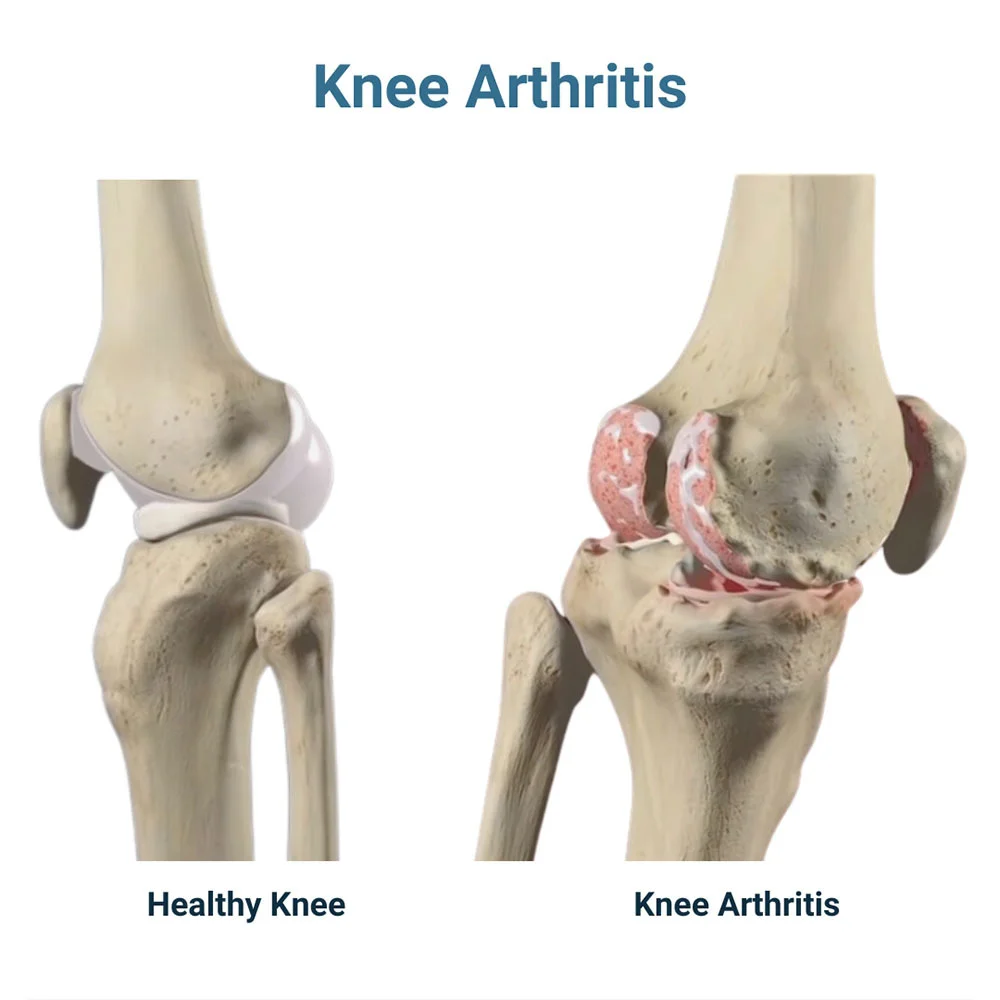
Chondromalacia patella is the softening and gradual breakdown of cartilage on the underside of the kneecap. Unlike soft-tissue problems, this involves structural cartilage change - making early treatment more important.
Symptoms:
- Dull, aching pain at the front of the knee
- Grinding or crunching sensation (crepitus) during squats
- Pain after sustained activity, not always during
- Common in athletes in their 30s-40s with accumulated training wear
4. IT Band Syndrome
The iliotibial (IT) band is a thick connective tissue band running down the outer thigh to the knee. When tight - typically from overuse, narrow squat stance, or weak hip abductors - it creates friction against the lateral femoral condyle.
Symptoms:
- Sharp, burning pain on the outer side of the knee
- Pain that builds through a set and peaks just after
- Tender to touch along the outer knee
- Often triggered by squatting with feet too close together
5. Meniscus Irritation
The menisci are two C-shaped cartilage pads inside the knee that cushion the joint. Deep, loaded squats compress and rotate the medial meniscus - problematic in athletes with pre-existing wear or minor tears.
Symptoms:
- Sharp or aching pain along the inner knee line
- Worsens with rotation (pivoting, twisting)
- May feel like the knee catches or clicks mid-squat
- Does not always swell immediately
6. Poor Squat Form and Muscle Imbalances
A substantial percentage of squat-related knee pain originates not in the knee but in form breakdowns caused by weakness or tightness elsewhere in the chain.
The most damaging errors:
- Knee valgus (knees caving inward) - driven by weak glutes and hip abductors
- Heels rising - caused by limited ankle dorsiflexion
- Excessive forward lean - increases anterior knee stress
- Knees too far forward past toes - compounds patellar tendon load
The pain appears in the knee, but the fix is usually at the hip or ankle. This is why strengthening and mobility work - not just rest - resolves these cases.
Where Is Your Knee Pain? A Location Guide
Pain location is the fastest way to narrow down the cause before you see a clinician. Match your pain to the most likely diagnosis:
Front of the knee (around or behind kneecap) — Patellofemoral pain syndrome or patellar tendinitis. Most common. Triggered by quad-dominant loading.
Outside of the knee — IT band syndrome. Sharp and burning. Builds through the set. Often worse on narrow-stance squats.
Inside of the knee (along the joint line) — Medial meniscus irritation or MCL stress. Aches with deep flexion or wide-stance squats.
Back of the knee — Baker's cyst or posterior capsule irritation. Feels like tightness or fullness. Visible swelling at the back warrants prompt assessment.
Pain that moves or is hard to localise — Often patellofemoral in origin, or referred pain from the hip. Harder to self-diagnose - worth a clinical evaluation. See our guide on knee pain when bending and straightening for more specific symptom patterns.
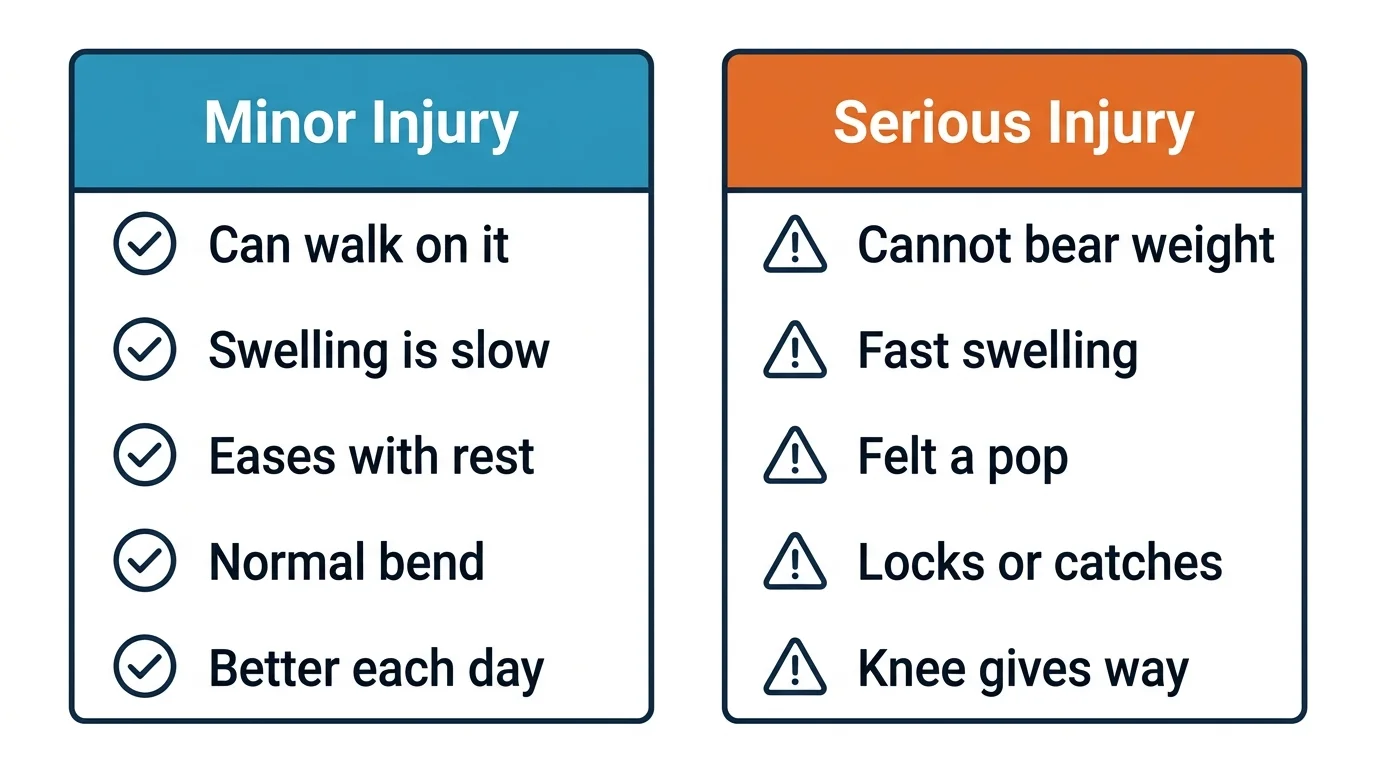
Is Knee Pain After Squats Normal? When to Worry
Normal (no action needed beyond rest):
- Mild, diffuse muscle soreness peaking 24-48 hrs post-session
- Soreness that improves with movement and resolves fully within 72 hrs
- No swelling, no locking, no clicking
Warning signs - stop squatting, get assessed:
- Sharp or stabbing pain during the squat movement
- Swelling inside or around the joint
- Clicking, popping, locking, or giving way
- Pain worsening across consecutive training sessions
- Pain affecting stairs, walking, or rising from a chair
- Symptoms persisting beyond two weeks despite rest
Key rule: if you need to change how you walk, your knee is telling you something specific. Don't mask it with anti-inflammatories and continue loading.
How to Fix Knee Pain After Squats (Try These First)
For mild, recent-onset pain with no swelling or mechanical symptoms, these five steps address the most common causes:
1. Audit your squat form
Record yourself from the front and side. Check: are your knees tracking over toes 2-3? Are your heels flat? Is your chest staying up? Widening your stance 5-10 cm or turning toes out 15-20° often eliminates significant patellar stress immediately.
2. Strengthen glutes and hip abductors
Weak hips allow knee valgus under load. Add these three exercises before squatting:
- Clamshells (3 × 15 each side) - hip abductor activation
- Single-leg Romanian deadlifts (3 × 10) - glute and hamstring control
- Terminal knee extensions / TKEs (3 × 15) - VMO activation
3. Improve ankle dorsiflexion
Limited ankle mobility forces heel rise and compensatory forward lean. Use a banded ankle distraction drill for 2 × 60 seconds per side before training. Elevated-heel squats (heels on plates) are a short-term workaround while mobility improves.
4. Reduce load and modify depth
Cut squat volume by 30-50% temporarily. Substitute goblet squats or box squats to reduce patellar stress. High-foot-position leg press maintains quad strength without the same joint compression angle.
5. Manage acute soreness
Ice for 15-20 minutes post-training. NSAIDs (ibuprofen or naproxen) for acute flares only - these control symptoms, not root cause. Do not rely on them to continue training through pain.
When to See a Sports Pain Specialist in NYC
Self-management works for mild, recent-onset cases. Book a consultation with a knee pain specialist in NYC when any of the following apply:
- Pain has persisted for more than two weeks despite rest and load reduction
- Swelling that does not resolve overnight
- Clicking, locking, or a giving-way sensation
- Pain progressively worsening - each session worse than the last
- Pain affecting daily activities: stairs, walking, standing from a chair
- You've had a previous knee injury and this feels different
NYC athletes typically wait too long. A problem addressed at four weeks responds to conservative care. The same problem at four months often requires injection therapy or imaging, and recovery is longer. See our guide on how to tell if a knee injury is serious if you're unsure.
How Sports Pain Management NYC Treats Knee Pain After Squats
Every treatment plan starts with a precise diagnosis - not a generic "rest and ice" instruction.
Diagnostic process:
- Physical exam: patellar tracking, joint-line palpation, ligament stability tests, range-of-motion
- In-office diagnostic ultrasound: real-time soft tissue, tendon, and bursa visualisation
- MRI referral if meniscus or cartilage assessment is required
Treatment options, matched to diagnosis:
- Ultrasound-guided cortisone injection - delivers anti-inflammatory medication precisely to the target (bursa, tendon sheath, or joint capsule) with imaging confirmation. First-line for PFPS with significant inflammation and acute tendon flares. Find out what to expect from a cortisone injection for knee pain at our clinic.
- Platelet-rich plasma (PRP) - for chronic patellar tendinitis or early chondromalacia. Concentrates your own growth factors and delivers them under ultrasound to promote structural tissue repair over time.
- Physical therapy referral - form correction, VMO strengthening, and progressive loading protocols run alongside any injection therapy. The injection creates the window; PT closes the gap.
- Return-to-squatting protocol - every patient leaves with a structured progression from bodyweight squats to loaded back squats, with clear milestones so the return to full training is deliberate and safe.
Also see: common knee injuries from running if your knee pain started or worsens with cardio alongside your lifting.
Conclusion
Most knee pain after squats is diagnosable, treatable, and recoverable - with the right approach. Patellofemoral syndrome, patellar tendinitis, and form-driven loading errors account for the majority of cases and respond well to targeted treatment. The athletes who end up with chronic problems are the ones who train through clear warning signs for too long.
If your knees are still sore two weeks after backing off, book a consultation with our sports pain specialists in NYC. A precise diagnosis - not a self-managed guess - is what gets you back under the bar safely.
Frequently Asked Questions
It depends on the type and cause. Mild, diffuse muscle soreness can generally be trained through at reduced intensity. Any sharp pain, swelling, clicking, locking, or giving-way sensation during the squat is a hard stop - loading an injured knee converts minor structural problems into major ones. When in doubt, drop weight and depth, and if it still hurts, stop.