

Neck Pain Exercises: A Complete Guide for Cervical, Upper Back and Posture Pain
Quick Answer
The best exercises for neck pain are chin tucks, upper trapezius stretches, neck stretches, shoulder blade squeezes, and child's pose. Most people can begin within 24-48 hours for acute pain, or immediately for chronic conditions. Avoid full neck circles, heavy overhead pressing, and any movement that sends pain into the arm.
Neck pain affects an estimated 10-20% of adults at any given time, yet most people either rest too long or return to movement too quickly. The right exercises - matched to your specific type of neck pain - are the fastest route to recovery and the best long-term protection against recurrence.
This guide covers evidence-based exercises for cervical, upper back, and posture-related neck pain, organised by condition and body region. Browse to the section that matches your situation, or explore our condition-specific exercise programmes below.
Neck Pain Exercises - Step by Step
Step 1: Neck Stretches
Start here if your neck is stiff, acutely painful, or you are returning to movement after a flare-up.


Step 2: Neck Strengthening Exercises
Begin once Step 1 stretches feel comfortable - typically 3-5 days in. These 7 exercises build the deep cervical flexors and upper back stability that prevent recurrence.


Step 3: Posture & Upper Back Exercises
Add these daily once strengthening is pain-free. These posture exercises correct forward head position and reset scapular alignment - the root cause of most chronic neck pain.


Step 4: Yoga for Neck Pain
Complement your programme with these 6 yoga poses for cervical decompression, thoracic mobility, and full upper-body release. Particularly effective for chronic and stress-related neck tension.


Why Exercise Is Essential for Neck Pain Recovery
Rest was once the standard prescription for neck pain. Current clinical evidence reverses that advice: prolonged rest weakens stabilising muscles, reduces blood flow to injured tissues, and significantly increases the risk of chronic pain. Movement - the right kind, at the right time - is now the evidence-based first-line treatment.
What targeted exercise does:
- Strengthens the deep cervical flexors - the longus colli and longus capitis stabilise every disc and joint. Weakness forces the head forward, loading the spine by up to 10 lbs per inch of forward displacement.
- Reduces compressive load on discs and facet joints - strong upper back and scapular muscles absorb load that would otherwise fall directly on the cervical spine.
- Corrects forward head posture - for every inch the head moves forward, the effective cervical spine load increases by ~10 lbs. Posture exercises directly reduce this mechanical load.
- Increases circulation to injured soft tissues - cervical discs have no direct blood supply - they rely on movement for nutrition and healing.
- Prevents recurrence - patients who complete a structured cervical programme experience significantly fewer and less severe flare-ups than those who rest through pain.
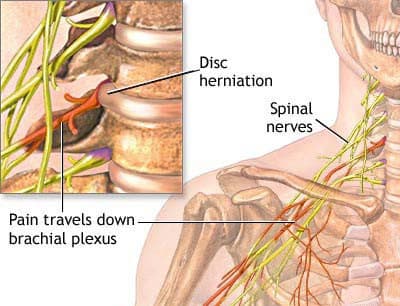
Important: The exercises below are appropriate for most mechanical neck pain. If you have nerve symptoms (shooting pain down the arm, numbness or tingling in the fingers, or significant weakness), please consult one of our specialists before starting - the exercise selection is different and requires a clinical assessment first.
Neck Pain Exercises by Condition
Different diagnoses require different approaches. Picking the wrong exercises for your specific condition can worsen symptoms - especially with disc injuries and nerve involvement.
Best exercises:
- Chin Tuck - restores neutral alignment without loading the disc
- Dorsal Glide Stretch - gentle cervical extension mobilisation
- Neck Stretch - lateral release, safe when arm symptoms are absent
- Wall Dog Pose - decompression without compressive loading
- Shoulder Blade Squeeze - reduces disc pressure through postural correction
Avoid:
- Forward Neck Flexion - increases pressure at C5-C7
- Head Roll - avoid full rotation during active radiculopathy
- Any exercise that reproduces arm pain, numbness, or tingling
Best exercises:
- Chin Tuck - maintains neutral, reduces foraminal narrowing
- Shoulder Blade Squeeze - reduces compressive cervical load
- Wall Slides with Chin Nod - corrects posture without cervical loading
- Child's Pose - gentle traction in a supported, decompressed position
- Chair Twist - thoracic mobility without cervical compression
Avoid:
- Extreme cervical extension - narrows the spinal canal further
- Heavy overhead pressing - adds vertical compressive load
- High-impact activity during active flare
Best exercises:
- Upper Trapezius Stretch - primary spasm location in most patients
- Levator Scapula Stretch - secondary spasm site
- Neck Stretch - sustained hold releases the reflex-guarding response
- Shoulder Rolls - promotes circulation without muscle loading
- Child's Pose - full cervical and thoracic release
Avoid:
- Aggressive or ballistic stretching - triggers protective spasm response
- Rapid head rotation - aggravates acute spasm
- Loading the spasming muscle until the acute phase fully resolves
Best exercises:
- Anterior Cervical Rotation - maintains rotation within the pain-free arc
- Chin Tuck - reduces facet joint loading in forward head position
- Shoulder Rolls - promotes blood flow and reduces morning stiffness
- Forward Neck Flexion - maintains flexion range gently
- Child's Pose - safe decompression with minimal joint load
Avoid:
- Extremes of motion - end-range positions compress arthritic facets
- Sustained static postures - reduce circulation to arthritic joints
- Heavy cervical loading or axial compression
Best exercises:
- Chin Tuck - opens the foramen at C5-C7 in most presentations
- Upper Trapezius Stretch - reduces tension on the nerve sheath
- Shoulder Blade Squeeze - scapular repositioning reduces nerve drag
- Lateral Side Bend Strengthening - builds lateral cervical stability
- Resisted Rows - upper back strength reduces nerve root compression indirectly
Avoid:
- Any movement reproducing arm pain, numbness, or tingling - stop immediately
- Cervical compression or axial loading under resistance
- Lateral rotation toward the symptomatic side under load
Neck Exercises for Desk Workers and Sitting Pain
Prolonged sitting with a forward head position is the single largest driver of new neck pain in adults under 50. These exercises can be performed at or near your desk:
Chin Tuck - pull chin back, hold 5 sec. 10 reps every 30 minutes.
Shoulder Blade Squeeze - squeeze and hold 8 sec. Every 60 minutes.
Shoulder Rolls - 10 backward rolls every hour. Takes 20 seconds.
Upper Trapezius Stretch - 20-30 sec each side after every 90 minutes of screen time.
Neck Stretch - 30 sec each side, 2x per afternoon when tension builds.
Neck Pain Exercises to Avoid
These are the exercises most commonly performed that can worsen specific types of neck pain:
Full Neck Circles (360°)
Full posterior rotation compresses cervical arteries and facet joints at end-range extension. Replace with controlled semicircle rolls from shoulder to shoulder only.
Heavy Overhead Press
Axially loads an already-compromised cervical spine. Contraindicated during any disc, stenosis, or radiculopathy flare.
Loaded Cervical Flexion
Pulling the head during crunches or behind-the-neck press creates extreme disc pressure at C5-C7. One of the most common causes of acute cervical disc herniation in weight-training patients.
High-Impact Running During Acute Flare
Repetitive jarring aggravates inflamed cervical structures. Wait until the acute flare resolves before returning to impact sport.
Extremes of Extension Under Load
Closing the foramen under resistance is the most reliable way to worsen cervical radiculopathy.
Exercise at home if:
See a doctor if:
Our NYC pain management team provides same-day evaluations for urgent neck pain. Accurate diagnosis is what separates the correct exercises from the wrong ones.
Our Neck Pain Exercise Programmes
Each programme below was designed by our sports medicine physicians and pain management specialists. Exercises are demonstrated with images and organised by difficulty level.
Neck & Upper Back Exercises
Complete cervical rehabilitation library - all 9 neck stretches and 7 strengthening exercises.

Posture & Sitting Exercises
Movements specifically designed for desk workers and forward head posture. Perform at your desk.

Yoga for Pain Relief
All 6 yoga poses for neck pain plus additional upper body and breathing routines.
Back Pain Exercises
Many patients have combined neck and back pain - see the complete back rehabilitation programme.
Conclusion
The right exercises for neck pain are specific - to your condition, your level of pain, and your posture baseline. The movements in this guide cover the most evidence-based options for cervical, upper back, and posture-driven neck pain. Start gently, track your symptoms over 48-72 hours, and progress only when each movement is pain-free.
If symptoms include arm pain, numbness, or tingling - or if home exercise is not improving your pain within two to three weeks - book a consultation with our sports pain specialists in NYC. A precise clinical diagnosis, not a self-managed guess, is what allows the correct rehabilitation programme to be prescribed.
Frequently Asked Questions
The best exercises for neck pain are chin tucks, upper trapezius stretches, neck stretches, shoulder blade squeezes, and resisted rows - targeting the deep cervical flexors and upper back stabilisers that support the cervical spine.
Yes - for most mechanical neck pain, controlled movement is better than rest. The exception is severe nerve symptoms (arm pain, numbness, tingling) or pain following trauma - consult a specialist before starting.
Stretches 2-3 times daily for acute pain; strengthening every other day for chronic pain; posture corrections (chin tuck, shoulder rolls) daily at your desk.
Avoid forward neck flexion under load, full head rolls, and any movement that reproduces arm pain or tingling. Chin tucks, dorsal glides, and wall dog pose are safe alternatives.
Most people notice reduced stiffness within 1-2 weeks. Significant pain reduction typically occurs by week 4-6 with consistent exercise.
Mild mechanical neck pain with no arm symptoms can be managed at home with this programme. If symptoms include arm pain, numbness, or no improvement after 2-3 weeks, book a specialist assessment.